
11.10.2026 à 08:51
Pourquoi le prix du bois chute-t-il après un incendie ou une tempête ?
Texte intégral (2859 mots)
L’ESSENTIEL
Après une tempête ou un incendie, de nombreux arbres endommagés peuvent être vendus si on agit rapidement.
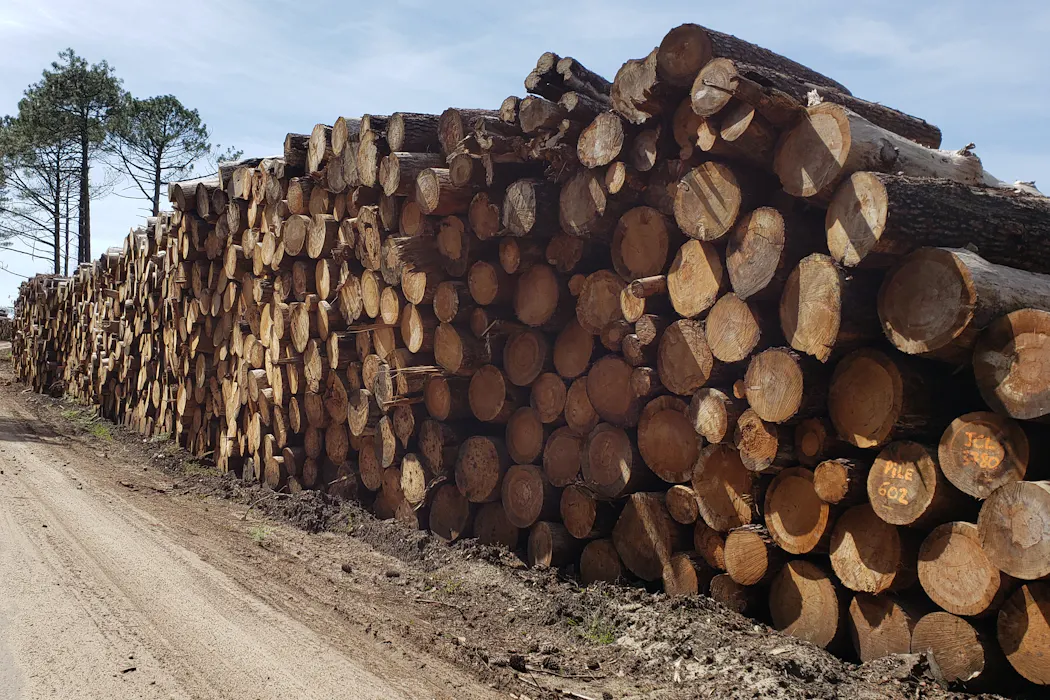
Un afflux de bois à écouler dans les plus brefs délais sur le marché fait alors baisser les prix.
Quelques années plus tard, l’inverse peut survenir : la production d’arbres a diminué et les prix remontent.
C’est un phénomène qui peut parfois surprendre : après des événements catastrophiques de type incendie ou tempête, le prix du bois a tendance à chuter. Le grand public peut souvent s’étonner de cette réalité, en pensant qu’il y a sûrement moins de bois disponible après ces fléaux et que la rareté de cette matière première en augmente forcément les prix. La réalité est tout autre, voici pourquoi.
Beaucoup de bois à écouler rapidement
Après une catastrophe de grande ampleur, beaucoup d’arbres sont endommagés simultanément. Mais cela ne signifie pas que le bois est perdu. S’il est récolté rapidement, il reste exploitable pour la plupart des usages, de la construction à l’énergie, même s’il perd l’accès aux débouchés les plus valorisants.
Une partie ne sera jamais récoltée, non parce qu’elle est inutilisable, mais parce que ce ne sera pas rentable. Le reste doit cependant être exploité rapidement afin de limiter leur dégradation et de préserver leur valeur commerciale. Il en résulte un afflux potentiel de bois sur le marché, mais la filière forêt-bois ne peut pas nécessairement absorber une telle quantité en peu de temps.
Un exercice périlleux en temps limité
Le premier verrou se situe en forêt, où les capacités d’exploitation habituelles, en bûcherons, en engins et en accès aux parcelles, ne suffisent pas à récolter dans le temps imparti l’afflux d’arbres abattus par une catastrophe. Prélever le bois endommagé en forêt est, dans la grande majorité des cas, le travail des entreprises de travaux forestiers (ETF), qui réalisent environ 80 % des travaux d’exploitation en France. Or, le Conseil général de l’alimentation, de l’agriculture et des espaces ruraux (CGAAER) souligne que la profession est confrontée à des difficultés d’attractivité et de recrutement. Les travaux de récolte sont en outre décrits comme physiquement exigeants et dangereux par l’interprofession nationale.
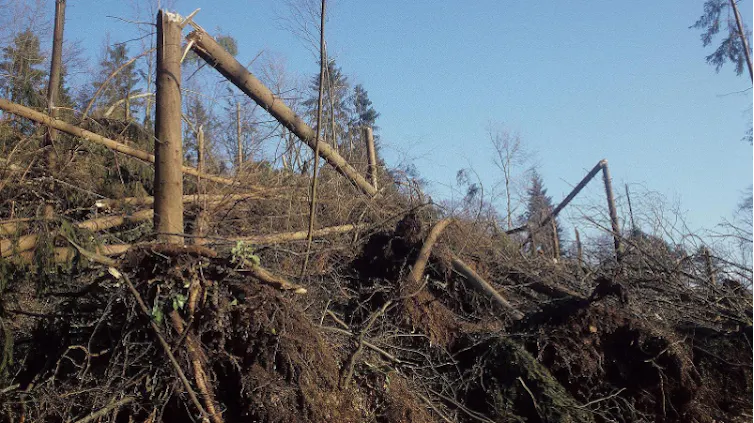
Dans le cas d’une tempête, par exemple, l’exploitation des chablis (les arbres renversés ou brisés par le vent) est particulièrement contraignante : enchevêtrés au sol, ils présentent des difficultés techniques et de sécurité spécifiques pour les exploitants (cf. photo ci-dessous). Pour cette raison, les [pouvoirs publics] ont notamment retenu un surcoût forfaitaire d’exploitation des chablis de 10 euros par mètre cube, déductible du revenu forestier des propriétaires sinistrés, après les tempêtes de 1999 et, dans le Sud-Ouest, après la tempête Klaus en 2009.
Dans ce contexte, la capacité effective de récolte peut être réduite au moment même où le volume à exploiter augmente fortement.
Une logistique complexe et des scieries de moins en moins nombreuses
Le deuxième verrou concerne la logistique. Les bois doivent être abattus, façonnés, débardés (sortis des parcelles jusqu’en bord de route), transportés et, lorsque leur conservation l’exige, stockés dans des conditions permettant de ralentir leur dégradation.
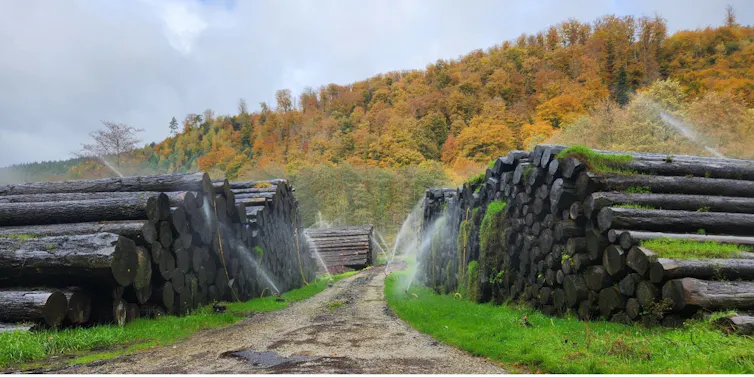
Lors des grandes tempêtes, une partie des troncs abattus (les grumes) a été conservée par aspersion : un arrosage continu maintient le bois saturé en eau, ce qui limite l’apport d’oxygène et ralentit le développement des champignons et insectes responsables de sa dégradation (cf. photo ci-dessous). Cette technique a permis notamment de réguler l’afflux de chablis sur le marché.
La tempête Caetano, en novembre 2024, illustre cette contrainte dans la vallée de la Tarentaise, en Savoie : l’Office national des forêts (ONF) estimait à environ 60 000 mètres cubes le volume de chablis à exploiter, soit, pour la seule commune des Allues, l’équivalent d’environ vingt années d’exploitation habituelle. Un an après, en novembre 2025, l’essentiel de ces bois avait été évacué, façonné et écoulé auprès d’acheteurs partout en France, grâce à des contrats d’approvisionnement mobilisés en urgence.
Le troisième verrou est industriel. Selon l’Agreste, la France comptait 1 214 scieries en 2022, contre 9 000 en 1973, selon la Cour des comptes. La Cour des comptes souligne surtout le sous-dimensionnement de l’outil français : avec une surface forestière inférieure d’environ un tiers, l’Allemagne produit plus de deux fois plus de sciages.
S’y ajoute un décalage structurel, le « paradoxe français » : les sciages portent à 80 % sur des résineux alors que la forêt est feuillue à environ deux tiers. La France importe ainsi chaque année environ 2 millions de mètres cubes de sciages résineux.
Un choc d’offre
Il résulte de cette situation un décalage : après une tempête, un incendie ou une infestation de scolytes (des petits coléoptères qui coupent la circulation de la sève de certains conifères en creusant des galeries dans le bois), la quantité de bois qui pourrait être vendue dépasse largement la quantité qui peut effectivement être récoltée, transportée et transformée dans la fenêtre de temps où ce bois conserve sa valeur. Les prix s’effondrent, tandis qu’une partie des volumes se dégrade sur pied ou en forêt avant d’avoir pu être mobilisée.
En langage économique, on dit que l’offre est supérieure à la demande. Dans ce contexte, la réaction du marché, c’est une chute des prix. En effet, plus un produit est disponible, plus son prix est bas et, inversement, plus un produit est rare, plus il est cher. Il n’est donc pas surprenant qu’un afflux massif de bois sur le marché génère ce que l’on appelle un « choc d’offre ».
Un tel choc fut observé à la suite des tempêtes de 1999 et de 2009. D’après le Centre d’études et de prospectives (CEP) du ministère de l’agriculture, le prix du pin maritime a ainsi chuté de près de 60 % après la tempête Klaus de 2009.
Ce phénomène a également été observé, dans une moindre mesure, dans l’est de la France, en 2018 à la suite des ravages des scolytes. Les conséquences économiques de ces ravages ont été encore plus manifestes dans d’autres pays, en République tchèque par exemple, où la crise des scolytes de 2018 a provoqué une hausse de 340 % des quantités de bois endommagés, engendrant une chute des prix du bois de 73 %.
Un contrecoup possible
Un choc d’offre, cela signifie une urgence à traiter immédiatement, mais aussi des problèmes d’approvisionnement à anticiper. En effet, beaucoup de bois maintenant, cela signifie moins de bois plus tard, car les arbres mettent du temps à pousser. Par conséquent, une baisse brutale des prix peut être suivie après quelques années par une hausse brutale, puisque le bois devient plus rare. On l’observe clairement sur le graphique ci-dessous avec le prix du pin maritime qui s’est effondré à la suite de la tempête Klaus de 2009 avant de remonter progressivement jusqu’à atteindre deux fois le prix d’avant tempête (environ 25 euros par mètre cube en 2005 versus 50 euros en 2018).
Certaines caractéristiques peuvent contribuer à accentuer cette chute de prix. Tout d’abord, si les dommages sont concentrés dans une zone assez restreinte, le marché local va s’effondrer. De plus, la baisse du prix est plus importante quand le bois est homogène en essence et en usage.
Ces deux caractéristiques ont été rencontrées lors de la tempête Klaus de 2009. Cette tempête a touché essentiellement le sud-ouest de la France, endommageant principalement du pin maritime. La chute de prix qui s’est ensuivie fut spectaculaire, atteignant un prix de zéro en 2009-2010. Dans ce cas précis, il devient urgent d’alimenter un marché plus large, d’évacuer les bois vers d’autres régions, voire d’autres pays. Si la catastrophe avait touché plusieurs régions et des essences variées, l’impact aurait été moindre, comme ce fut le cas avec la tempête de 1999 (cf. graphique).
Peut-on minimiser la baisse des prix ?
Comment, dès lors, limiter ces chutes et hausses des prix ?
Les propriétaires peuvent utiliser des contrats d’approvisionnement qui stipulent une date de récolte et un prix, de manière à ne pas subir la volatilité courante des prix du bois. Toutefois, cet instrument ne fonctionne pas en cas d’aléa, car le propriétaire impacté n’est pas en mesure de respecter les clauses du contrat, notamment en matière de qualité et de diamètre.
Une pratique souvent mise en œuvre est de demander aux propriétaires d’être solidaires. En effet, on va suggérer aux propriétaires qui n’ont pas été touchés d’attendre, de décaler leur récolte afin de limiter les bois disponibles sur le marché. Par exemple, après les incendies de 2022 dans le Sud-Ouest, les ventes d’automne par appel d’offres ont été annulées afin de permettre la récolte des bois sinistrés dans les meilleures conditions.
Ensuite, plusieurs politiques publiques peuvent être mises en œuvre, dont certaines ont déjà été testées. Par exemple, une politique de stockage a déjà été mise en œuvre à la suite des tempêtes de 1999 et de 2009. Il s’agit d’entreposer les bois sur des aires de stockage spécifiques, ce qui permet de lisser l’offre de bois dans le temps, c’est-à-dire d’écouler les bois sur le marché plus lentement.
Des subventions au transport ont également déjà été mises en place après les mêmes tempêtes. Elles ont pour objectif de favoriser la circulation des bois sur le territoire et au-delà, c’est-à-dire d’élargir le marché. Enfin, la fixation d’un prix plancher est également une mesure disponible, mais qui, à notre connaissance, bien que parfois discutée, n’a jamais été décidée. Cette fois, il s’agit d’imposer un prix minimum de vente afin d’éviter la ruine du vendeur.
Des aléas de plus en plus fréquents
Sous l’effet du changement climatique, les aléas naturels deviennent plus fréquents et plus intenses. On observe notamment une récurrence d’aléas dans les mêmes zones géographiques. Le Sud-Ouest a ainsi subi une sécheresse en 2021, des incendies de l’été 2022 et les attaques de scolytes qui ont suivi. Ou encore, plus récemment, avec l’arrivée de la nématode du pin à Seignosse dans les Landes en novembre 2025, suivie de la tempête Nils en février 2026, et des grands incendies de l’été 2026. Ces risques multiples et en cascade vont encore accentuer l’instabilité du marché du bois et accroître la volatilité des prix.

Ce travail a bénéficié de l’appui de l’Observatoire pour L’Economie de la Forêt (OLEF) - https://doi.org/10.17180/hk4v-2a37, plateforme de l’UMR BETA. Les auteurs remercient Alexandra Niedzwiedz pour ses conseils et la réalisation du graphique. Ce travail a reçu le soutien du MP XRisques d’INRAE et du projet X-RISKS du PEPR FORESTT (ANR-24-PEFO-0005).
Ce travail a bénéficié de l’appui de l’Observatoire pour L’Economie de la Forêt (OLEF) - https://doi.org/10.17180/hk4v-2a37, plateforme de l’UMR BETA. Les auteurs remercient Alexandra Niedzwiedz pour ses conseils et la réalisation du graphique. Ce travail a reçu le soutien du MP XRisques d’INRAE et du projet X-RISKS du PEPR FORESTT (ANR-24-PEFO-0005).
08.10.2026 à 12:22
Vaut-il mieux manger de petits poissons ou de grands poissons ?
Texte intégral (2168 mots)
L’ESSENTIEL
On a tendance à manger plus de grands poissons que de petits poissons.
Pourtant privilégier les petits poissons a plus d’un intérêt pour la santé humaine.
La pêche des petits poissons impacte également moins les écosystèmes.
La consommation de poisson bénéficie d’une image très positive auprès des consommateurs européens, surfant notamment sur la vague de ce qu’on appelle la Healthy Food et de la mode de la cuisine japonaise.
Le poisson est perçu comme une nourriture nutritive, peu grasse, riche en micronutriments, et dont l’impact environnemental associé à sa production est relativement faible en comparaison de la viande.
Le succès des gros poissons
Alors que les consommateurs différencient généralement très précisément les espèces à l’origine de la viande qu’ils consomment (poulet, bœuf, porc…), le poisson est généralement considéré dans sa globalité, indépendamment des espèces concernées.
Or, là où moins d’une dizaine d’espèces animales terrestres sont communément consommées pour leur viande, les poissons dits « communs » regroupent plusieurs dizaines d’espèces.
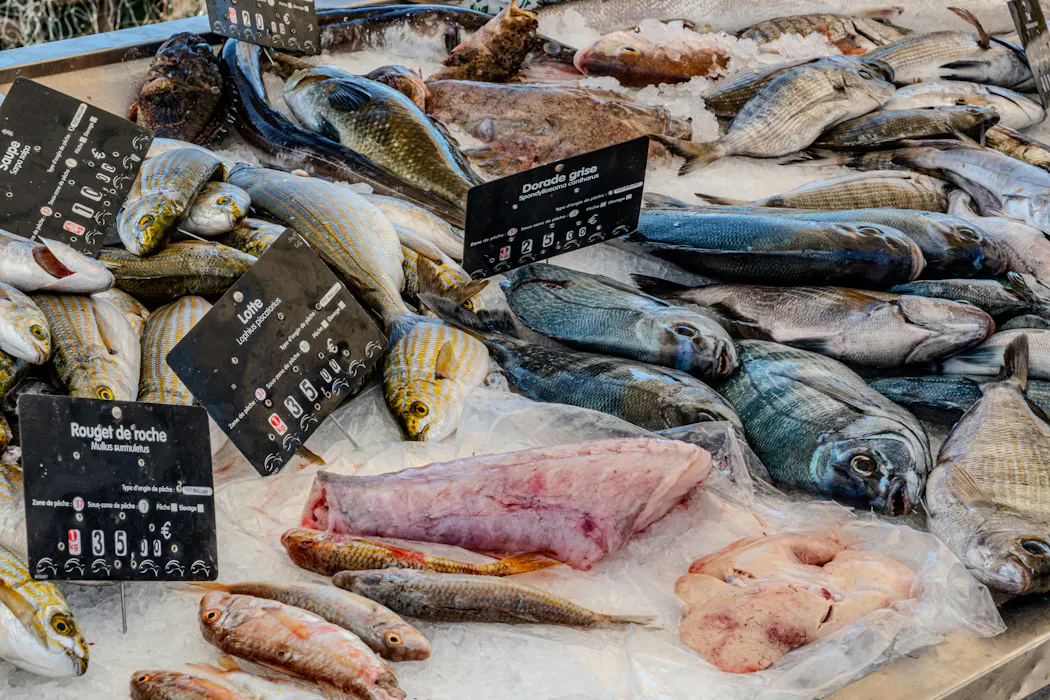
Parmi les poissons les plus consommés en Europe, les grosses espèces, comme le saumon, le cabillaud (nom alimentaire de la morue) ou le thon (il s’agit en réalité de plusieurs espèces regroupées sous cette appellation générique), se taillent la part du lion (de mer), représentant plus d’un quart de la quantité totale consommée.
À l’inverse, les petites espèces, regroupées sous le terme de « petits poissons pélagiques » (sardines, anchois, maquereaux, harengs…) représentent une quantité bien plus faible. Là où les gros poissons bénéficient généralement auprès du consommateur d’une image de nourriture nutritive, saine et naturelle, la perception des petits poissons pélagiques est plutôt celle d’une nourriture certes goûteuse, mais globalement plus traditionnelle, et pour tout dire, un peu vieillotte.
Alors a-t-on raison de privilégier les gros aux petits poissons ?
Plus d’avantages nutritifs chez les petits poissons
De manière générale, tous les poissons sont d’excellentes sources nutritives, et bien que leur composition en nutriments varie d’une espèce à une autre, tous sont de bonnes sources de macro et micronutriments, parmi lesquels le fer, le zinc, le calcium, le sélénium ainsi que les acides gras poly-insaturés oméga-3.
Ces derniers composés sont essentiels au bon fonctionnement de l’organisme (système immunitaire, développement nerveux, échanges cellulaires), et les carences peuvent induire des dysfonctionnements graves au plan nerveux, pouvant aller jusqu’au développement de maladies neurodégénératives ou de cancers. Parmi les oméga-3 les plus intéressants d’un point de vue métabolique, l’acide docosahéxaénoïque (DHA) et l’acide eicosapentaénoïque (EPA) sont quasiment exclusifs aux produits de la mer.
Synthétisés par les microalgues puis transférés le long de la chaîne alimentaire par le biais des organismes aquatiques, les humains dépendent presque exclusivement des produits de la mer pour acquérir ces composés.
Si tous les poissons marins en contiennent en quantités notables, les poissons de l’ordre des Clupéiformes, qui incluent sardines, anchois et harengs, sont connus pour être les plus riches en EPA et en DHA de tous les poissons ainsi qu’en calcium et en zinc.
Ainsi, parmi les centaines d’espèces de poissons consommées à l’échelle mondiale, les petits poissons pélagiques sont certainement ceux qui procurent le plus d’avantages nutritifs. Ils contribuent ainsi pleinement à la sécurité nutritionnelle.
Cette problématique est particulièrement prégnante dans les régions intertropicales, où une part importante de la population demeure exposée à l’insécurité alimentaire. En Afrique de l’Ouest, par exemple, on estime que celle-ci concernait 61,6 % de la population sur la période 2022-2024.
Dans ce contexte, la consommation de poisson, et plus généralement de produits de la mer, représente un potentiel important pour atteindre l’objectif de sécurité alimentaire énoncé par les Nations unies en 2015 comme l’un des 17 grands objectifs de développement durable à l’échelle planétaire.
Quid des polluants ?
En dépit de leur forte valeur nutritive, les poissons sont également soumis aux différentes pollutions qui affectent le milieu marin et qui peuvent s’accumuler dans leur chair, représentant in fine un risque potentiel associé à leur consommation. Deux mécanismes expliquent cette accumulation :
la bioaccumulation, phénomène par lequel les polluants que les organismes ne sont pas capables d’éliminer s’accumulent dans leurs tissus ;
la bioamplification, phénomène par lequel un prédateur accumule les polluants contenus dans la chair de ses proies.
Ainsi, à la fois du fait de la bioamplification et de la bioaccumulation, les gros poissons, qui vivent plus longtemps et sont généralement situés au sommet des chaînes alimentaires, sont théoriquement les plus susceptibles de présenter des niveaux de contamination associés à des risques sanitaires pour les polluants capables de se bioamplifier.
L’exemple le plus marquant est celui du mercure, soumis à ces deux mécanismes. On a ainsi pu observer chez certains grands prédateurs marins des concentrations en mercure dépassant toutes les normes internationales. Dans l’estuaire du Saint-Laurent au Québec (Canada), les carcasses de bélugas échouées sont ainsi traitées comme des déchets toxiques, en dehors des circuits classiques d’équarrissage.
Ce schéma général, qui décrit bien comment certains polluants comme le mercure s’accumulent plus chez les gros poissons que chez les petits, n’est cependant pas valable pour tous les polluants. Les poissons, comme tous les organismes marins, sont en effet soumis à un cocktail de polluants (métaux lourds, polluants organiques persistants, micro et nano-plastiques), qui ont des origines et des voies de contamination diverses, et face auxquels les poissons disposent des capacités de détoxification qui varient en fonction du polluant, et surtout de l’espèce concernée.
L’importance du contexte local
Au-delà de ces mécanismes généraux, il reste néanmoins important de mentionner que l’un des principaux facteurs contrôlant les niveaux de contamination des poissons en divers polluants reste le contexte local. Ainsi, indépendamment de la taille de l’organisme et de la nature du polluant considéré, s’il provient d’un milieu fortement contaminé, il sera plus susceptible de présenter lui-même des niveaux de contamination importants.
Dans une étude comparative des niveaux de contamination en divers polluants parmi plusieurs espèces de poissons marins des trois grandes façades maritimes de France hexagonale, il a ainsi pu être montré que les petites roussettes (Scyliorhinus canuicula) présentaient des niveaux de contamination en arsenic et en mercure entre trois et cinq fois plus élevés en Manche orientale que dans le golfe de Gascogne.
À l’inverse, le merlan (Merluccius merluccius) était huit fois plus contaminé au mercure dans le golfe du Lion, en Méditerranée, que dans le golfe de Gascogne. De même, la pêche des sardines en baie de Seine a été suspendue pendant près de douze ans en raison de leurs niveaux en polluant organique d’origine industrielle (ou PCB) et n’est de nouveau ouverte que depuis 2022, pour les mois d’avril à juin.
Au-delà du choix entre petit et gros poissons, l’origine géographique revêt donc une importance fondamentale en matière de risque sanitaire potentiel.
Quels impacts sur les écosystèmes ?
Enfin, au-delà des bénéfices nutritionnels et des risques potentiels associés à la présence de différents contaminants dans les poissons, un dernier point à considérer concerne les effets associés à leur capture ou à leur production.
La demande mondiale en saumon a conduit à la multiplication des fermes aquacoles intensives, dont les impacts sur l’environnement sont documentés :eutrophisation à proximité des installations, dissémination de pathogènes vers les populations sauvages, échappement d’individus qui viennent s’hybrider avec les populations sauvages.
Par ailleurs, l’alimentation de ces saumons d’élevage est essentiellement basée sur des farines animales produites à partir de petits poissons pélagiques dont la pêche industrielle entre en compétition avec la pêche artisanale de subsistance dans de nombreux pays qui en dépendent pour assurer leur sécurité alimentaire.
Enfin, les densités de poissons dans ces installations aquacoles, qui peuvent atteindre plusieurs dizaines de kilogrammes par mètre cube, posent également des questions fondamentales en matière de bien-être animal.
Les pêcheries thonières en milieu tropical, qui sont à l’origine de l’essentiel des conserves retrouvées en grande surface, ont également des conséquences importantes sur l’environnement, notamment en lien avec les captures accessoires qu’elles engendrent.
Dans le Pacifique oriental, on estime ainsi que, entre 1993 et 2009, en moyenne plus de 45 000 requins, 3 600 raies Manta et plusieurs dizaines de tortues marines sont capturés chaque année. Si les pêcheries thonières n’en sont pas les uniques responsables, elle joue un rôle incontestable dans le déclin de plus de 70 % des populations de requins à l’échelle mondiale de 1970 à 2018.
À l’inverse, du fait de leur durée de vie plus courte, leur maturité précoce et leurs forts taux de reproduction, les petits poissons pélagiques sont relativement moins sensibles à la pression de pêche. Si de nombreuses populations sont néanmoins surexploitées dans le monde, l’atteinte de niveaux d’exploitation cohérents avec un renouvellement naturel des stocks représente un objectif plus réaliste.
Cet article est publié dans le cadre de la Fête de la science (qui a lieu du 2 au 12 octobre 2026), dont The Conversation France est partenaire. Cette nouvelle édition porte sur la thématique « Saveurs savantes ». Retrouvez tous les événements de votre région sur le site Fetedelascience.fr.

Gauthier Schaal a reçu des financements de l'Agence Nationale de la Recherche, de l'Union Européenne (programmes Biodiversa, FEAMPA).
Alice Guillot a reçu des financements de l'Institut de Recherche pour le Développement (IRD), de ISblue (ANR17-EURE-0015), de l'Union Européenne (Biodiversa), et de l'Université de Bretagne Occidentale (UBO).
07.10.2026 à 16:54
Des variétés résistantes pour sauver la vigne : les consommateurs sont-ils prêts à changer de goûts et les vignerons à les adopter ?
Texte intégral (2062 mots)
L’ESSENTIEL
De nouvelles variétés de vigne résistantes aux principales maladies fongiques sont aujourd’hui disponibles à la plantation.
Malgré leur intérêt pour réduire jusqu’à 80 % de traitements phytosanitaires, leur adoption progresse lentement et l’offre commerciale reste limitée.
Des travaux menés en Occitanie dans le cadre du projet Ressenti et du Défi Clé Vinid’Occ permettent d’envisager leur avenir avec un certain optimisme.
Ces travaux Ressenti et Vinid’Occ visent à identifier les leviers et les freins à l’adoption de ces nouvelles variétés, notamment celles récemment inscrites au catalogue français et accessibles aux viticulteurs, afin de mieux comprendre les conditions nécessaires à leur développement.
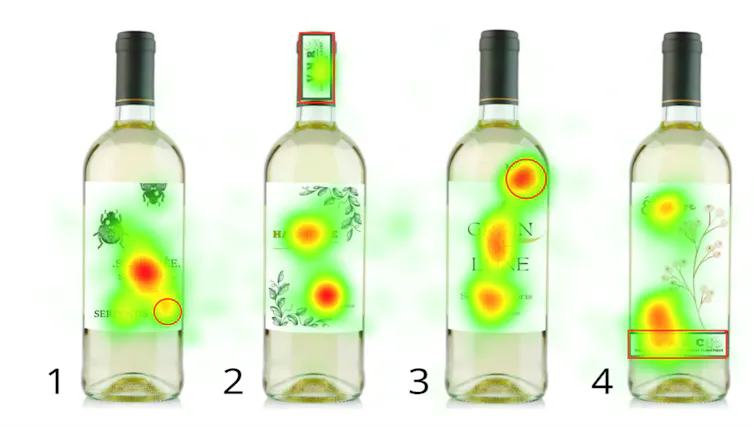
Depuis 2023, ce projet pluridisciplinaire associe un consortium de chercheurs toulousains et montpelliérains autour de deux thèses de doctorat. Il combine des enquêtes et des évaluations sensorielles auprès des acteurs de la filière et des consommateurs, ainsi que des approches de neuromarketing pour analyser les réactions face à ces nouveaux vins.
Stratégie d’hybridation
La vigne d’origine européenne cultivée dans nos vignobles appartient à l’espèce Vitis vinifera, du latin vinifera « qui donne le vin ». Au cours du XIXᵉ siècle, elle est mise en péril par l’introduction depuis le continent nord-américain de plusieurs pathogènes – phylloxera, mildiou ou oïdium – auxquels elle n’avait jamais été confrontée.
En plus de Vitis vinifera, d’autres espèces de vigne américaines, comme Vitis labrusca ou Vitis rupestris, ont en revanche développé, en co-évoluant avec ces pathogènes sur de longues périodes, des mécanismes adaptatifs de résistance. Ces espèces peuvent être croisées avec Vitis vinifera ; elles donnent des descendants viables, fructifères, ayant hérité d’une partie du génome de chacun des parents, incluant parfois des traits de résistance aux maladies.
Cette stratégie d’hybridation interspécifique a été utilisée de manière non dirigée au cours de l’histoire pour développer des espèces hybrides. Ces dernières possèdent une résistance aux maladies variable et donnent des vins de qualité œnologique généralement inférieure. Depuis 1935, six de ces hybrides – Clinton, Herbemont, Isabelle, Jacquez, Noah et Othello – ont été interdits en France pour produire du vin, du fait d’une aptitude supposée supérieure à produire des vins riches en méthanol et potentiellement dangereux pour la santé. Grâce à la persévérance d’un collectif cévenol, ces six hybrides sont en passe d’être de nouveau autorisés.
L’une des stratégies pour atténuer ces traits négatifs est de procéder à des rétrocroisements successifs avec Vitis vinifera pour ne conserver de l’espèce américaine que les gènes de résistance. Ces étapes très chronophages nécessitent de mesurer les caractéristiques des plants, de sélectionner ceux d’intérêt avant de procéder à un nouveau croisement.
Création variétale française
Les progrès de la génétique ont permis de gagner du temps, en repérant la présence des gènes d’intérêt à l’aide de marqueurs. La France, comme l’Allemagne, la Suisse et l’Italie, fait partie des leaders mondiaux en matière de création de ces variétés.
La stratégie nationale est prudente puisqu’elle vise à combiner plusieurs gènes, afin d’améliorer la résistance et d’éviter des contournements, c’est-à-dire la possibilité que certaines souches de pathogènes plus virulentes se développent sur ces variétés.
Depuis 2017, les premiers fruits de la création variétale française – les cépages floréal, voltis, artaban et vidoc – peuvent être plantés par les vignerons. Depuis ces premières inscriptions au catalogue national, plusieurs inscriptions ont suivi notamment les variétés dites Inrae-Bouquet, du nom d’Alain Bouquet, chercheur pionnier de l’Inrae.
Adoption de ces nouvelles variétés
En 2021, ces variétés représentaient 1 208 hectares de vignoble, soit seulement 0,15 % du vignoble français, avec une lente progression des plantations majoritairement localisées en Occitanie. La Champagne est une autre région pionnière qui expérimente ces variétés depuis plusieurs années.
Une analyse médiatique a montré que ces variétés étaient très peu présentes dans la presse généraliste, illustrant leur manque de visibilité. Au contraire, dans la presse viticole spécialisée, un consensus émerge en leur faveur, notamment au fil des évolutions réglementaires. Depuis 2018, leur culture expérimentale est autorisée dans certaines appellations d’origine protégées (AOP) grâce à la directive dite variété d’intérêt à fin d’adaptation (Vifa).
Même si les choses évoluent rapidement, l’offre est encore restreinte avec seulement 108 références commerciales identifiées en 2024.
Des signaux encourageants
D’un point de vue sensoriel, les travaux de Caroline Paire, doctorante sur le projet, ont montré qu’il existait une diversité de profils comparable aux vins conventionnels. Ils ont également mis en évidence qu’il n’y avait aucun obstacle sensoriel à l’acceptation des vins issus de ces variétés par les consommateurs, en blanc comme en rouge, en assemblage ou en cuvée monovariétale :
« Les professionnels restaient sceptiques vis-à-vis de ces nouvelles variétés, notamment pour les rouges dont ils jugeaient les vins rustiques, acides et de moindre qualité. L’utilisation de vidoc ou d’artaban, en assemblage avec du merlot, ne pénalise pas l’appréciation lors de nos essais. Nous avons identifié un seul groupe de consommateurs composé d’hommes âgés de plus de 65 ans et consommant du vin quotidiennement, préférant systématiquement les vins de Merlot pur. »
La question du nom à adosser à ces variétés est un sujet qui cristallise des tensions au sein de la profession. Certains acteurs souhaitent les désigner en référence à leurs géniteurs, une approche non cautionnée par les instances en charge de leur agrément. D’autres travaux en cours de publication montrent que la dégustation reste le juge de paix comme le souligne Caroline Paire :
« Le nom importe finalement peu au consommateur, dont les connaissances en la matière sont limitées. Lors de nos expérimentations, le cabernet blanc, une variété résistante blanche développée en Allemagne, a été fréquemment confondue avec le cabernet-sauvignon, le cépage rouge roi du Bordelais et la variété de cuve la plus plantée au monde. »
« Eye-tracking »
Des groupes de discussion couplés à des expériences d’eye-tracking, un dispositif utilisé en neuromarketing suivant les mouvements oculaires et analysant les signaux captant l’attention des consommateurs, ont été menés. La conclusion ? La propension à réduire de 80 % le nombre de traitements chimiques de ces variétés devait être utilisée pour communiquer autour de la résistance, de préférence sous la forme d’un logo ou d’une pastille.
À lire aussi : Les enfants voient l’art différemment : ce que nous apprennent les dernières recherches d’« eye-tracking »
Trois profils de producteurs
Le producteur, quant à lui, est tout aussi incapable que le consommateur de distinguer à la dégustation les deux types de vin. Le travail de l’équipe Ressenti a permis d’identifier trois profils :
les « sceptiques », professionnels plus âgés issus de caves particulières ;
les « réceptifs », coopérateurs manifestant un soutien mesuré à l’innovation ;
les « observateurs », jeunes professionnels sans pouvoir de décision.
Les 96 producteurs interrogés par Marc-Antoine Dolet, autre doctorant sur le projet, estiment que ces variétés pourraient couvrir jusqu’à 25 % du vignoble occitan d’ici trente ans.
Du consommateur au producteur, les signaux sont globalement au vert et laissent envisager un bel avenir pour ces nouvelles variétés. L’inconnue qui demeure est de savoir si la crise structurelle et profonde qui secoue le vignoble français et mondial agira comme accélérateur ou comme frein.
Cet article est publié dans le cadre de la Fête de la science (qui a lieu du 2 au 12 octobre 2026), dont The Conversation France est partenaire. Cette nouvelle édition porte sur la thématique « Saveurs savantes ». Retrouvez tous les événements de votre région sur le site Fetedelascience.fr.

Le projet Ressenti a reçu une subvention de la part de la région Occitanie, et un co-financement des Vignobles Foncalieu et des Grands Chais de France.
Caroline Paire a reçu des financements de la Région Occitanie.
Christian Chervin a reçu des financements de la région Occitanie.
Foued Cheriet a reçu des financements de la Région Occitanie.
Valérie Olivier ne travaille pas, ne conseille pas, ne possède pas de parts, ne reçoit pas de fonds d'une organisation qui pourrait tirer profit de cet article, et n'a déclaré aucune autre affiliation que son organisme de recherche.