
Articles intégraux en PDF
The Deep Green Resistance News Service is an educational wing of the DGR movement. We cover a wide range of contemporary issues from a biocentric perspective, with a focus on ecology, feminism, indigenous issues, strategy, and civilization. We publish news, opinion, interviews, analysis, art, poetry, first-hand stories, and multimedia.
▸ les 2719 dernières parutions
Local Women Saving Yucatán’s Mangroves
Editor’s note: “Never underestimate the power of a small group of committed people to change the world. In fact, it is the only thing that ever has.” ~ Margaret Mead.
(174 mots)
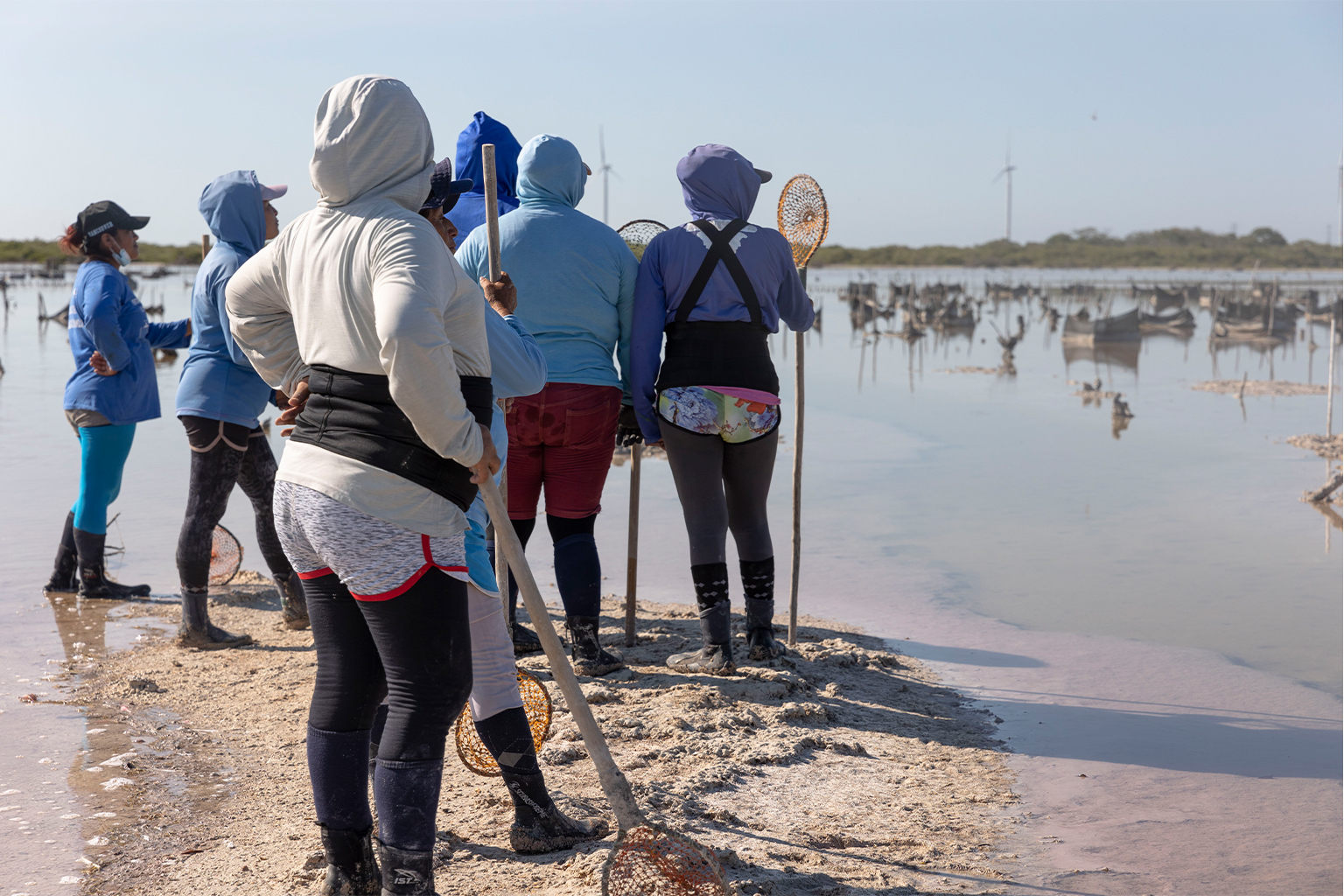 Several Chelemeras look out on the nursery before submerging themselves in the lagoon. After inclement weather, they return to the mangrove shelters to repair them. Image by Caitlin Cooper for Mongabay.
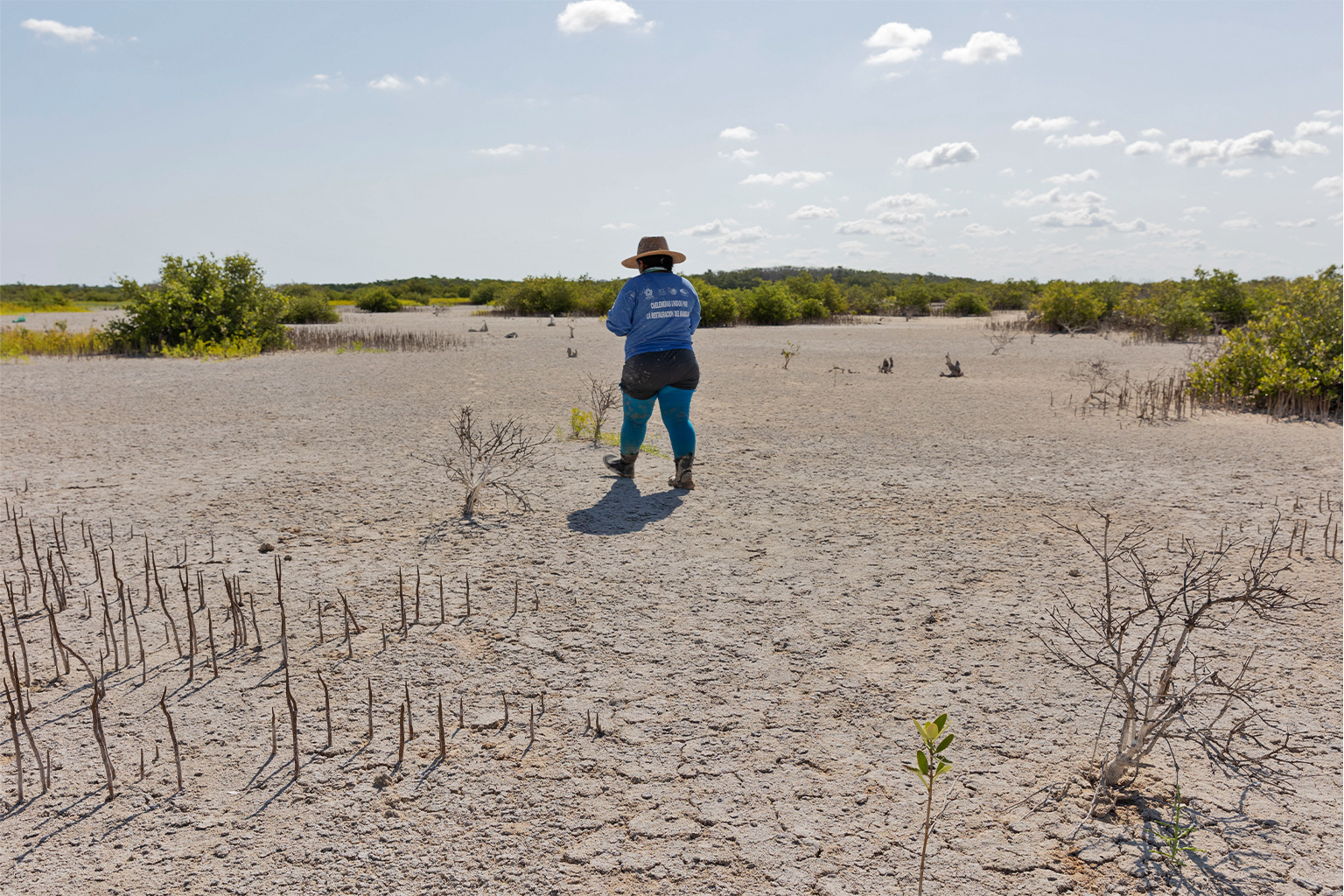 Keila Vazquez walks through a higher-elevation area in Progreso, Yucatán. Las Chelemeras are currently working to level the topography of the area so that freshwater can reach the mangroves naturally. Image by Caitlin Cooper for Mongabay.
By Astrid Arellano / Mongabay
Keila Vazquez walks through a higher-elevation area in Progreso, Yucatán. Las Chelemeras are currently working to level the topography of the area so that freshwater can reach the mangroves naturally. Image by Caitlin Cooper for Mongabay.
By Astrid Arellano / Mongabay
Corporate Vision for the Future of Food
Editor’s note: Want to try lab-grown salmon? The US just approved it. Who needs wild salmon. By Colin Todhunter / COUNTERCURRENTS Sainsbury’s is one of the ‘big six’ supermarkets in the UK. In 2019, it released its Future of Food report. It is not merely a misguided attempt at forecasting future trends and habits; it reads more like a manifesto for corporate control and technocratic tyranny disguised as ‘progress’. This document epitomises everything wrong with the industrial food system’s vision for our future. It represents a dystopian roadmap to a world where our most fundamental connection to nature and culture — our food — is hijacked by corporate interests and mediated through a maze of unnecessary and potentially harmful technologies. (149 mots)
China Is Building the World’s Biggest Dam
Editor’s note: The folly of controlling the rivers. “What will those who come after us think of us? Will they envy us that we saw butterflies and mockingbirds, penguins and little brown bats?” - Derrick Jensen Or will they despise us because we built dams which kill butterflies and mockingbirds, penguins and little brown bats? China Starts Construction on World’s Largest Hydropower Dam Brazil & China move ahead on 3,000-km railway crossing the Amazon (112 mots)
Military-Backed Plantation Project In Indonesian Papua
Editor’s note: Indonesia’s capital relocation mirrors the move of the country’s former colonisers By Hans Nicholas Jong / Mongabay JAKARTA — Indonesia’s national human rights commission has found a slew of legal and rights violations in a government-backed project to establish large-scale plantations in the eastern region of Papua. The so-called food estate project, categorized by the government as being of strategic national importance, or PSN, aims to clear 3 million hectares (7.4 million acres) of land in Merauke district, two-thirds of it for sugarcane plantations and the rest for rice fields — an area 45 times the size of Jakarta. (135 mots)
SLAPP Suit Against Thacker Pass 6
by Maximillian Alvarez, The Real News Network
May 9, 2025 https://open.spotify.com/episode/4bT1oQv4m9xpi42O9TU5oH?si=d7db06343fce4142 Vancouver-based Lithium Americas is developing a massive lithium mine in Nevada’s remote Thacker Pass, but for nearly five years several local Indigenous tribes and environmental organizations have tried to block or delay the mine in the courts and through direct action. Six land defenders, known as the “ Thacker Pass 6,” are currently being sued by Lithium Nevada Corporation and have been barred by court injunction from returning to and peacefully protesting and praying at the sacred site on their ancestral homeland. TRNN Editor-in-Chief Maximillian Alvarez speaks with two members of the “Thacker Pass 6,” Will Falk and Max Wilbert, about the charges against them and the current state of the struggle over the construction of the Thacker Pass mine. (189 mots)
This lithium company is trying to sue Indigenous land defenders into silence
DGR’s Annual Conference August 1-5, 2025 In Philadelphia
The Deep Green Resistance Annual Conference will make its East Coast debut this year in Philadelphia. This is an opportunity to build our movement with activists who may have been unable to attend our previous conferences on the West Coast. Your conference ticket includes all meals, overnight accommodations (beds are limited, so some people may be on couches or floors), great workshops and discussions, and a chance to talk to Derrick Jensen in an intimate setting. (116 mots)

DGR’s next annual conference
August 1-5, 2025 in Philadelphia.
Saving Saiga Antelope
By Mike DiGirolamo / Mongabay In 2006, a group of international NGOs and the government of Kazakhstan came together to save the dwindling population of saiga antelope of the enormous Golden Steppe, a grassland ecosystem three times the size of the United Kingdom. Since that moment, the Altyn Dala Conservation Initiative has successfully rehabilitated the saiga ( Saiga tatarica) from a population of roughly 30,000 to nearly 4 million. For this monumental effort, it was awarded the 2024 Earthshot Prize in the “protect & restore nature” category. This prize, launched by David Attenborough and Britain’s Prince William, also provides a grant of 1 million pounds ($1.32 million) to each winner. (144 mots)
Do Nukes Cause Climate Change?
Editor’s note: When you invent nuclear energy (nukes) you invent radioactive waste Some proponents of nuclear energy refuse to give up on the technology. They blame the decline in nuclear energy and the high costs and long construction periods on the characteristics of older reactor designs, arguing that alternative designs will rescue nuclear energy from its woes. In recent years, the alternatives most often advertised are small modular (nuclear) reactors—SMRs for short. These are designed to generate between 10 and 300 megawatts of power, much less than the 1,000–1,600 megawatts that reactors being built today are designed to produce. (121 mots)
Twin Ship Disasters In India
Editor’s note: Result of deeper structural failures Speaking at a media briefing to raise awareness on the importance of accountability when such maritime disasters occur, Anita Perera, Campaigner for Greenpeace South Asia, said that when a team visited Mannar on June 19, they noticed a significant number of plastic pellets even after one round of cleanup operations. “The Mediterranean Shipping Company (MSC) is responsible for cleaning up the oil spill, but so far, they haven’t communicated their response to expedite the cleaning of nurdles or the oil spill. This isn’t an isolated incident but a result of deeper structural failures in how we are governing our oceans and environmental safety. These are critical ecosystems, and there are people(and all of the other species) whose daily livelihoods would be affected as a result of such disasters. We need to hold these companies accountable for such incidents,” she underscored. (171 mots)
West Sulawesi Erupts In Protest Over Sand Mining
Editor’s note: Indonesia lifts its ban on sea sand exports More than 250 members of Indigenous and local communities gathered in Indonesia’s Merauke district to demand an end to government-backed projects of strategic national importance, or PSN, which they say have displaced them, fueled violence, and stripped them of their rights. PSN projects, including food estates, plantations and industrial developments, have triggered land conflicts affecting 103,000 families and 1 million hectares (2.5 million acres) of land, with Indigenous communities reporting forced evictions, violence and deforestation, particularly in the Papua region. In Merauke itself, the government plans to clear 3 million hectares (7.4 million acres) for rice and sugarcane plantations, despite Indigenous protests; some community members, like Vincen Kwipalo, face threats and violence for refusing to sell their ancestral land, as clan divisions deepen. Officials have offered no concrete solutions, with a senior government researcher warning that continued PSN expansion in Papua could escalate socioecological conflicts, further fueling resentment toward Jakarta and potentially leading to large-scale unrest. (206 mots)
Bon Pote
Actu-Environnement
Amis de la Terre
Aspas
Biodiversité-sous-nos-pieds
Bloom
Canopée
Décroissance (la)
Deep Green Resistance
Déroute des routes
Faîte et Racines
Fracas
F.N.E (AURA)
Greenpeace Fr
JNE
La Relève et la Peste
La Terre
Le Lierre
Le Sauvage
Low-Tech Mag.
Motus & Langue pendue
Mountain Wilderness
Negawatt
Observatoire de l'Anthropocène