
Articles intégraux en PDF
The Deep Green Resistance News Service is an educational wing of the DGR movement. We cover a wide range of contemporary issues from a biocentric perspective, with a focus on ecology, feminism, indigenous issues, strategy, and civilization. We publish news, opinion, interviews, analysis, art, poetry, first-hand stories, and multimedia.
▸ les 2719 dernières parutions
High Speed Rail: The Insanity of Civilisation
In this writing Ben asks questions about a rail development that is destroying the natural world. He asks what it would take to stop the development and why we are not all talking about it. By Ben Warner Probably not, unfortunately, but it is an excellent example. Standing in the same place for centuries should mean something. The men must have made a mistake. They have destroyed a National Asset. The National Heritage has a list of criteria for granting protected status that includes being in the same place for centuries. Why have they just demolished a possible candidate for the National Heritage List for England? The answer is, it was a tree who was razed to the ground and not a building. The tree was in the way of “progress” and those who get in the way are often crushed.< (213 mots)
Is high speed rail the pinnacle of civilisations’ insanity?
198 Methods of Nonviolent Action
This post has been crossposted from Albert-Einstein Institute. Practitioners of nonviolent struggle have an entire arsenal of “nonviolent weapons” at their disposal. Listed below are 198 of them, classified into three broad categories: nonviolent protest and persuasion, noncooperation (social, economic, and political), and nonviolent intervention. A description and historical examples of each can be found in volume two of The Politics of Nonviolent Action , by Gene Sharp. Formal Statements 1. Public Speeches
2. Letters of opposition or support
3. Declarations by organizations and institutions
4. Signed public statements
5. Declarations of indictment and intention
6. Group or mass petitions (140 mots)
THE METHODS OF NONVIOLENT PROTEST AND PERSUASION
A Dyson Sphere Will Not Stop Collapse
This is the second in a series of articles reflecting on a recent study which predicts collapse of industrial society within a few decades. In the first essay, Max Wilbert discusses how in the long-run, collapse will benefit both humans and nature alike. This second essay in the series explores a “solution” proposed by the original authors of the study—a “Dyson sphere”—and why it will not save us from a collapse. By Salonika / DGR Asia-Pacific (117 mots)
Peril In The Hills: Extreme Weather A Danger For Nilgiri Ecosystem
Godwin Vasanth Bosco reports on extreme precipitation that has fallen on the Nilgiri plateau of southern India the last few years. These extreme and unprecedented rain events have led to massive landslides and other ecological damage. Little has been done to address the crisis. Featured image: A massive landslide in one of the largest sholas in the Avalanche region of the Nilgiris, with hundreds of native trees and the stream ecology washed away. (79 mots)
Scientists Find Microplastics in Human Organs
The production of plastics must halt. It is the only way to stop the influx of toxic substances into streams, rivers, lakes, oceans, and into our own bodies. This piece, which is made up of excerpts from a longer article, discusses new research into microplastics found in human organs. by Krissy Waite / Common Dreams “The best way to tackle the problem is to massively reduce the amount of plastic that’s being made and used.” (95 mots)
They Want To Mine The Deep Sea
In this article Julia Barnes describes the process of seabed mining and calls for organized resistance to this new ecocidal extraction industry. This article was originally published in Counterpunch We shouldn’t be surprised. This culture has stolen 90% of the large fish, created 450 de-oxygenated areas, and murdered 50% of the coral reefs. It has wiped out 40% of the plankton. It has warmed and acidified the water to a level not seen since the Permian mass extinction. And indeed, there is another mass extinction underway. Given the ongoing assault on the ocean by this culture, there is serious question as to whether the upper ocean will be inhabitable by the end of this century. (209 mots)
They want to mine the deep sea.
Grassroots Forest Defenders Establish Third Blockade to Defend Vancouver Island Old Growth Forest
A third blockade has started to stop the logging of near the headwaters of Fairy Creek. To learn more about the blockade in Fairy Creek, read the media release by the organizers of the blockade, and listen to interviews with Joshua Wright here and here. Access the official Facebook page here. Two weeks into a campaign to halt logging of ancient rainforests in the last intact watershed of the San Juan River system, activists have set up a third blockade on unceded Pacheedaht territory! (127 mots)
Eastside Forest Scam–The Proposed Removal of the 21-inch Rule.
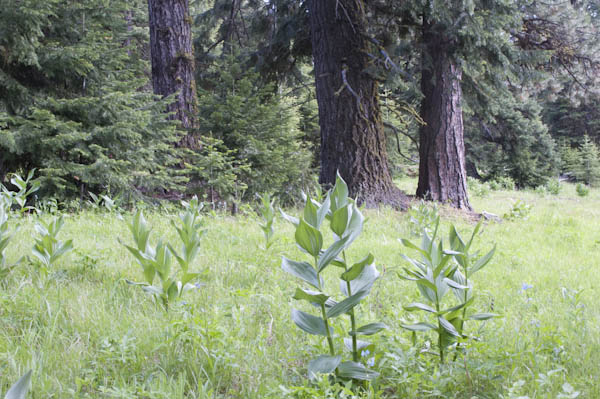
Large and old-growth trees in the dry eastern region of the U.S. state of Oregon are under threat as the agency which regulates Forest Service lands plans to remove existing protections, George Wuerthner reports. By George Wuerthner / The Wildlife News / August 13, 2020 The Forest Service has begun a 30 day comment period on its proposal to eliminate the 21-inch rule or what is known as the Eastside screens. The plan would remove a prohibition against cutting trees larger than 21 inches in the drier forests east of the Cascades in Oregon and Washington. The agency suggests that forests are denser than historical conditions and have shifted in their species composition. Not all researchers agree with this interpretation, but since these scientific studies don’t support more logging, they are usually ignored. (196 mots)
An Hour For Others: How Can You Support Action From Afar?
In this video clip Derrick Jensen talks about how to support direct action, both through loyalty and physical, material support. Derrick lists many ways people can support others on the front line, using examples such as supporting indigenous people opposing oil pipelines and the importance of using your skill set from accounting and writing to others who can cook and sew. When one cannot go to support an action directly, how can one still support that action? (114 mots)
Derrick Jensen challenges those of us listening to offer an hour a week for another person’s activism.
[The Ohio River Speaks] When History Becomes Hallucination
The Ohio River is the most polluted river in the United States. In this series of essays entitled ‘ The Ohio River Speaks,‘ Will Falk travels the length of the river and tells her story. Read the first, second, third, fourth, fifth, sixth, seventh, eighth and ninth part of Will’s journey. On the Tidioute Bridge, where forests accompany the Ohio River through the round Pennsylvania hills, I fretted over my responsibilities as a writer to tell the truth as I experience it. So far, on my journey with the Ohio River, I had experienced beauty, but this beauty was always tempered by the horrific reality of the Ohio River’s abuse. I had experienced moments of peace, but this peace was eventually always drowned out by my anxiety over the river’s future. (238 mots)
Bon Pote
Actu-Environnement
Amis de la Terre
Aspas
Biodiversité-sous-nos-pieds
Bloom
Canopée
Décroissance (la)
Deep Green Resistance
Déroute des routes
Faîte et Racines
Fracas
F.N.E (AURA)
Greenpeace Fr
JNE
La Relève et la Peste
La Terre
Le Lierre
Le Sauvage
Low-Tech Mag.
Motus & Langue pendue
Mountain Wilderness
Negawatt
Observatoire de l'Anthropocène