
Enough is enough: over 2 million petition signatures at UNGA to Make Polluters Pay
Greenpeace International
New York, United States – Campaigners from organisations around the world today delivered petitions with a combined total of over 2 million signatures to Selwin Hart, Assistant Secretary-General for Climate Action at the United Nations, calling on governments to Make Polluters Pay and ensure fossil-fuel companies are taxed more to pay their fair share for the climate damage they have caused. The petition delivery took place in New York as world leaders gathered for the UN General Assembly, following a season marked by devastating wildfires, floods and deadly climate disasters, alongside continued energy insecurity linked to dependence on oil and gas. Mads Christensen, Executive Director, Greenpeace International said: “2026 is a year the whole world could feel. August was the hottest month ever recorded, and scientists confirmed we are close to breaking the 1.5°C limit governments swore to hold. The climate crisis is here, and it falls hardest on the people who did the least to cause it. The biggest oil companies keep chasing profit to the last barrel, fueling the very disasters wrecking lives, ready to burn everything behind them rather than change course. The wealthiest polluters should be permanently taxed more to pay for the damage they cause, not the families and communities left to pick up the bill. Governments now face a clear choice, and too many are still on the wrong side of it: keep shielding the wealthiest polluters, or stand with the rest of us paying the price. This is how we take the profit out of destruction and protect the generations to come. It is us, or them.” The action brought together by the Make Polluters Pay International Coalition alongside frontline campaigners and communities, highlighted the growing gap between the costs being borne by ordinary people and the extraordinary profits continuing to flow to fossil-fuel companies.The campaign is calling on governments to introduce binding measures that make fossil-fuel companies contribute to the costs of the damage they have caused, including climate damages taxes, surtaxes on fossil-fuel profits and fines to fund recovery, adaptation and a just transition. The over 2 million signatures represent people across countries and regions demanding that those who have profited from fossil fuels contribute their fair share to addressing the climate crisis. The petition presentation comes as governments discuss global security, resilience and economic stability at the UN General Assembly, with international negotiations on climate finance and global tax rules also approaching. Selwin Hart, UN Assistant Secretary-General for Climate Action said: “The fossil fuel industry right now is earning extraordinary profits. Since Russia’s invasion of Ukraine, the five largest oil companies have earned half a trillion in profits. As the climate crisis accelerates, developing countries are being starved of the resources they need to protect their communities and to safeguard livelihoods from a crisis they did literally nothing to cause. This is unjust. This is the heart of climate injustice. Polluters must pay, and the UN supports this effort, we are with you. We urge you to use every single legal and lawful tool at your disposal. Regulate, legislate and litigate. Civil society must use every tool at your disposal to hold the polluters accountable. You are on the right side of history.” Anne Jellema, Executive Director, 350.org said:“For years, campaigners and communities on the frontlines have been saying the same thing: the companies that have profited from fossil fuels must pay their fair share of the costs of the crisis they helped create. Today, that demand is moving into the mainstream. We have watched homes burn, communities flood and families struggle with the rising costs of climate and energy crises, while fossil-fuel companies continue to make extraordinary profits. We pay. They profit. It’s time to change that.Now the voices of more than two million people are being brought to the United Nations. Governments have the power to make polluters pay, and they must use it.” Amitabh Behar, Executive Director, Oxfam International said: “Super-rich polluters are causing the most climate damage while the rest of us are left to pay the price. The emissions of just five oil giants were enough to cause around one in four heatwaves since 2000, and the six biggest are on track to rake in $147 billion this year. Meanwhile, farmers, women and families across the Global South are losing their lives, harvests and homes to a climate emergency they did not create. There is no fixing the climate crisis without taking on the billionaires and corporations cashing in on it. Frontline communities and millions of people have made their demand clear: make the richest polluters pay. Now world leaders must find the courage to protect billions of lives instead of polluters’ billions of dollars.” Fletcher Harper, Executive Director, GreenFaith said: “Every religion teaches the same moral principle: you do not get to harm your neighbor and walk away. That is why religious leaders around the globe are calling for climate polluters to pay for the damage they have caused. For 50 years, the fossil fuel industry has enjoyed $3 billion in daily profits while knowingly creating pollution responsible for one in five deaths globally. Communities worldwide are absorbing the mounting costs of climate damage. Those expenses have not been paid by the polluters. They have been pushed onto families, communities, and taxpayers. In moral terms, that is theft.” Governments now have a clear mandate from millions of people: accelerate the transition away from fossil fuels, invest in clean and affordable renewable energy, and make the companies that have profited from fossil fuels pay their fair share of the costs of the crisis. ENDS For further information, interviews and photos, please contact: Gaby Flores, cflores@greenpeace.org, +1 214 454 3871 Greenpeace International Press Desk, +31 (0)20 718 2470 (available 24 hours), pressdesk.int@greenpeace.org Photo and video available in the Greenpeace Media Library. Notes: The figure is the combined total of signatures across participating petitions. Some people may have signed more than one petition and there may be some duplication, so it does not represent a count of unique individuals. The petitions are united by the principle that those most responsible for climate breakdown – in particular fossil fuel corporations and their super-rich owners and investors – should now be taxed more to pay their fair share.’ Texte intégral (1137 mots)
Six ways the war on Iran exposed the real cost of plastics
Lindsey Jurca
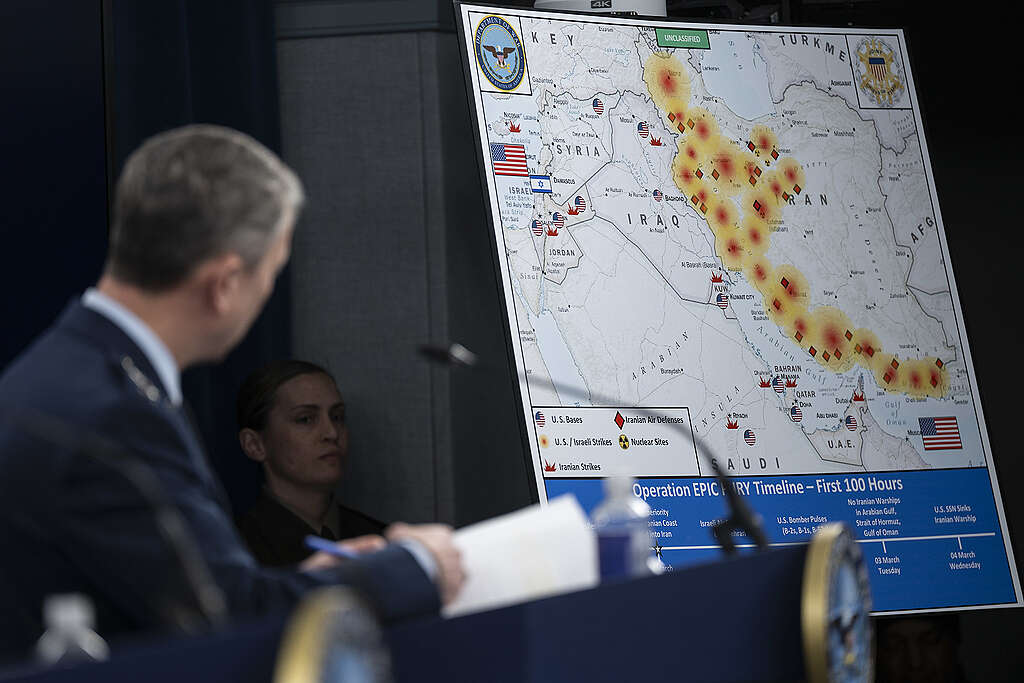
The gravest consequences of the war are borne by people in Iran and across the region: lives lost, families displaced and essential infrastructure damaged. Its fossil fuel shock has also carried economic consequences far beyond the battlefield. The war on Iran triggered an oil market crisis that sent shockwaves far and wide, and some consequences are still unfolding. Impacts rippled beyond energy and transport into shops and supermarkets, pharmacies and homes. People everywhere are still paying. Nearly everything we buy, from shampoo bottles to strawberry packaging, is made from or with petrochemicals, wrapped in plastic, or both. But it does not have to be, and most people do not want it to be. The war exposed a hidden risk in the plastics economy. Plastic depends on fossil fuel feedstocks and global petrochemical supply chains. When oil and gas supplies are disrupted, the cost and availability of packaging, medical supplies and everyday goods are disrupted too. Households, public services and communities ultimately pay. The war has changed the terms of the debate around the Global Plastics Treaty. It has revealed the real costs of being tethered to the plastics supply chain. At the next round of treaty negotiations, governments have a choice. They can lock in deeper vulnerability to future price and supply shocks, or build economies resilient enough to withstand them. Here are six things the conflict has shown us. The war disrupted plastic production, imports, and exports at once, sending costs soaring worldwide. Formosa Petrochemical Corp (FPCC), one of the world’s largest plastic producers, was forced to declare force majeure. This is a legal term meaning it could not meet contractual obligations because of circumstances beyond its control. In Japan, polyethylene production, a plastic widely used in shopping bags and packaging, reportedly fell 62% in March. Shortages then spread from factories to supermarket shelves. The fallout reached beyond supply chains to hospitals, where South Korea had to ban the hoarding of medical syringes. It reached household cupboards, where the price of body wash reportedly climbed 7.7% in a matter of weeks. It also reached children’s toy boxes. A US-based soft-toy manufacturer said its supplier in China had cited material cost increases of 10% to 15% within three weeks of the war starting. Petrochemicals go into more than 6,000 everyday products, according to the US Department of Energy. The question is not whether every one of these products can change overnight. It is how many uses can be reduced, redesigned or replaced with safer, non-fossil-fuel alternatives. This conflict revealed new pressure points for countries whose industries depend heavily on plastics and petrochemical feedstocks. According to South Korean media, naphtha import prices rose 68% in a single month, while small and medium-sized manufacturers reported material shortages and cost increases of more than 20%. As some producers were forced to scale back, China saw the conflict as a way to move beyond years of oversupply and low margins. Its own efforts to curb destructive overcapacity and price competition had struggled to resolve this problem. It increased exports to Asian markets, used accumulated inventory, ramped up idle capacity and absorbed demand left by disrupted competitors. One industry analyst has described this as a potentially lasting shift in market share. Meanwhile, the US turned the same crisis into a windfall. Ethane-fed plants were less exposed to disruption at the Strait of Hormuz and kept input costs lower even as global prices climbed. Producers raised prices as markets tightened. Dow raised North American polyethylene prices by 10 cents a pound in March, then 15 cents in April, before doubling that increase days later. Another increase was announced in August. LyondellBasell said its second-quarter earnings, excluding unusual items, rose nearly 600% year on year to US$1.4bn. Dow swung from a loss to a profit within a few quarters of the war’s start. This was not simply a story of market adjustment. Companies with less exposure to naphtha supply disruptions were better positioned to profit while producers and communities elsewhere absorbed the risks. The benefits and harms of the petrochemical economy are not distributed fairly. Communities near extraction, refining and petrochemical facilities often carry pollution and health burdens, while countries dependent on imported fuel and feedstocks are exposed to prices they cannot control. According to NielsenIQ data reported by Reuters, grocery prices in the US rose 2.9% year on year in the four weeks from the start of the war to 28 March. The same data showed bottled-water prices rising 5.8%, while nappies, pads and tampons, all of which contain plastics, rose by between 2% and 6%. School lunchboxes rose by more than 26%, the biggest increase of any school item, according to retail data. Synthetic footwear could also become more expensive. With roughly 70% of synthetic shoe materials derived from petrochemicals, industry analysts project prices could rise by another 1.5% to 3% by late summer and autumn. In Taiwan, the price of a basic plastic bag more than doubled, and Costco reportedly had to ration the number of food storage bags a single customer could buy. Companies and governments made the decisions that left economies exposed to this crisis, but it was ordinary people who paid for it. They paid through petrol, public transport, food, household goods and essential supplies. The impacts are not shared equally. Lower-income households, small businesses, informal workers and countries reliant on imported fossil fuels and petrochemical feedstocks have far less room to absorb higher costs or shortages of essential goods. In March, just weeks into the conflict, South Korea’s president, Lee Jae Myung, told his cabinet that the country’s deep reliance on petrochemicals made it difficult to predict where the next disruption would hit. He warned it ‘poses a serious threat to people’s daily lives’. By April, he had moved from emergency response to longer-term reform, calling for a ‘plastics-free economy’. Taiwan’s government expanded reuse infrastructure to build a more resilient economy and reduce exposure to market fluctuations. The lesson is not that scarcity or rationing is desirable. It is that planned, publicly supported reuse and reduction systems can protect people better than an economy dependent on volatile virgin plastic supply chains. The question is whether enough governments act in time to avoid the next shockwave. Industry has long argued that plastic is too convenient, too cheap and too embedded in everyday life to be meaningfully cut back. But when Taiwan’s plastic bags suddenly became scarce, society continued to function. Retailers adjusted, the government expanded reuse programmes, and people brought their own bags. As virgin plastic prices climbed, French retailer Carrefour committed to removing 5,000 tonnes of plastic from its packaging through refill formats and packaging reductions. It said it would pass the savings on to customers through lower prices. This does not mean responsibility should fall on individuals. It means governments and businesses can build systems that make reuse, refill and less packaging easy, accessible and affordable. Single-use plastic is embedded in retail systems, but it is not as indispensable as the industry claims. Cutting back is possible, and it can reduce costs as well as pollution. The conflict is not over, and even when it is, disruptions will come again. A similar pattern played out in 2021, when the Ever Given blocked the Suez Canal for six days, disrupting global trade and adding to existing pressures on plastics supply chains. Exposure is also set to grow. The IEA predicts that plastics and petrochemicals are on track to become the single largest driver of growth in global oil demand through 2050. Plastic producers are not separate from the fossil fuel economy. Petrochemicals are made from fossil fuel feedstocks, so continued growth in virgin plastic production deepens demand for oil and gas. It also locks communities and economies into exposure to future price shocks. At the next round of Global Plastics Treaty negotiations, governments have a critical opportunity to cut dependence on fossil fuels, reduce the health harms caused by plastics and build systems more resilient to the next disruption. A binding treaty that meaningfully cuts plastic production is not only a win for public health, ecosystems and the climate. It could be a turning point for economic security, geopolitical stability and the resilience of the systems we all depend on. The lesson of the war on Iran is not that people should learn to live with shortages. It is that economies built around fossil fuels and ever-growing virgin plastic production are exposed to shocks they cannot control. A strong, binding Global Plastics Treaty can help change that. By cutting plastic production, expanding accessible reuse systems and supporting a just transition away from fossil fuel dependence, governments can reduce pollution and help protect people from the next price shock. Governments should protect people now while reducing future exposure. They should support reuse systems, invest in accessible refill and public services, and shift public investment away from fossil fuel and petrochemical expansion. The people and communities least responsible for this system should not be the ones left paying for it. Governments must put public wellbeing, resilience and a liveable future ahead of the profits of fossil fuel and petrochemical companies. For a more in-depth analysis, read our brief. Ask world leaders to support Global Plastic Treaty so that we can finally turn off the tap and end the age of plastic. Texte intégral (3365 mots)
(and why it matters for the Global Plastics Treaty)
1. Plastic supply chains are vulnerable to fossil fuel shocks

2. The crisis created winners and losers
3. Households, public services and communities bear the costs

4. Some governments are choosing reuse and resilience
5. Reuse and reduction can work at scale

6. Without structural change, the next shock is inevitable
A Global Plastics Treaty can help break the cycle
Lindsey Jurca is a Senior Plastics Campaigner at Greenpeace USA.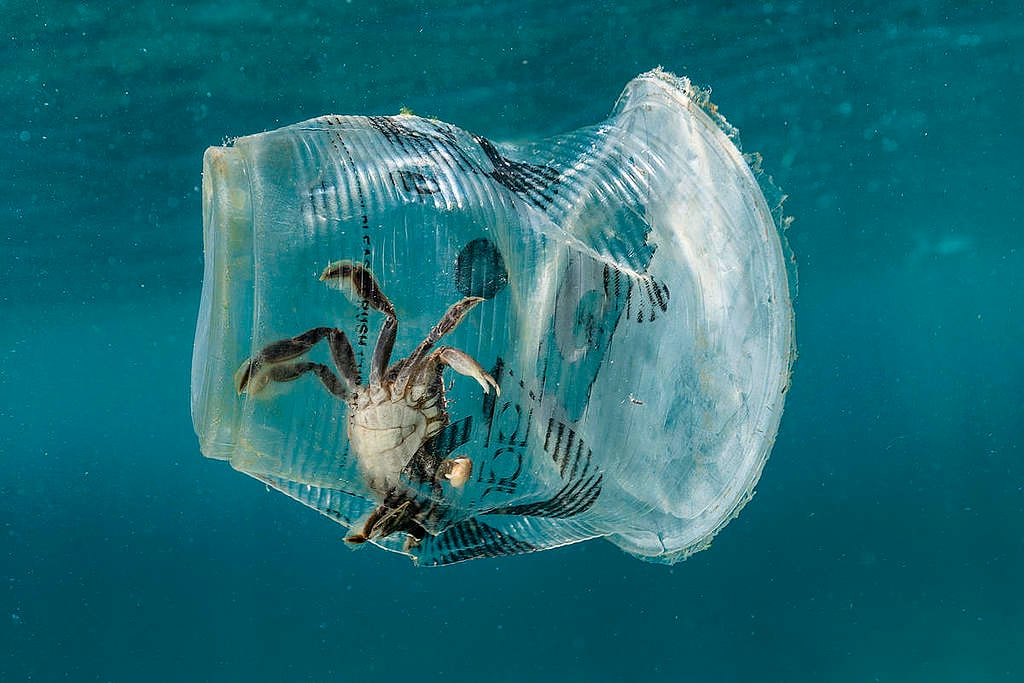
Greenpeace Pictures of the Week
Greenpeace International
A march for the climate in Amsterdam, calling out the fossil gas scam in Bangkok, and protesting ammonia in Mexico City, here are a few of our favourite images from Greenpeace work around the world this week. Greenpeace has been a pioneer of photo activism for more than 50 years, and remains committed to bearing witness and exposing environmental injustice through the images we capture. To see more Greenpeace photos and videos, please visit our Media Library. Texte intégral (2886 mots)
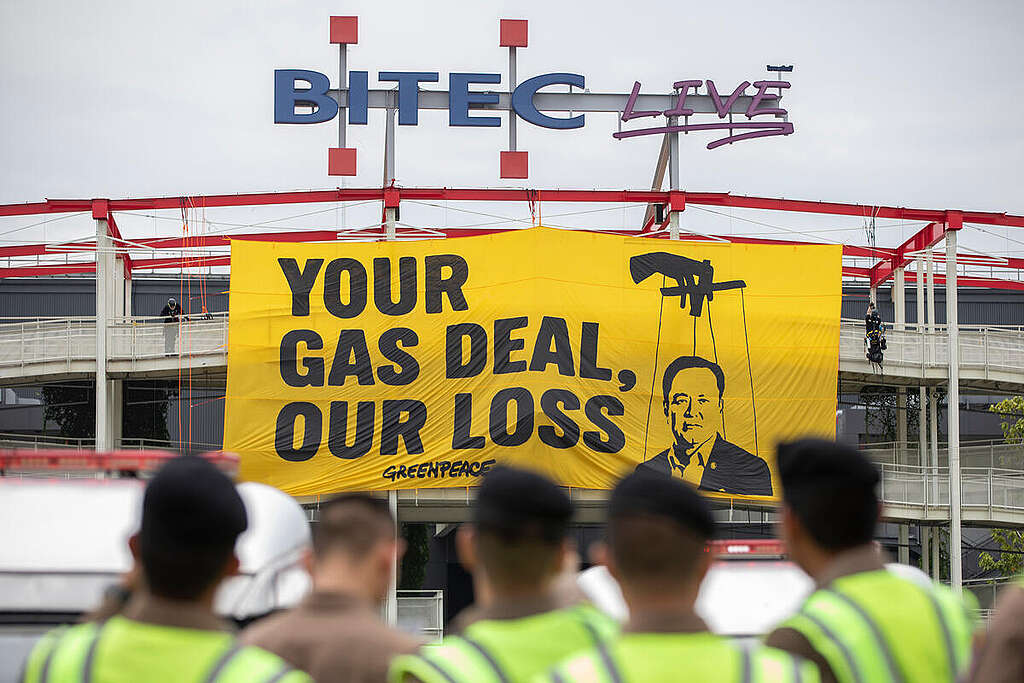
 Thailand – Greenpeace Thailand activists unfurled a 17 by 7 meter banner with the message “YOUR GAS DEAL, OUR LOSS” at the opening of GasTech 2026, calling out the Thai government and fossil fuel industry while challenging their promotion of fossil gas and LNG expansion as a solution for energy security, economic growth and the climate crisis. Greenpeace Thailand is calling on the government and energy companies attending Gastech 2026 to halt further fossil gas expansion and accelerate a just transition to renewable energy, with greater investment in renewable power, energy efficiency, energy storage and modernised power grids.
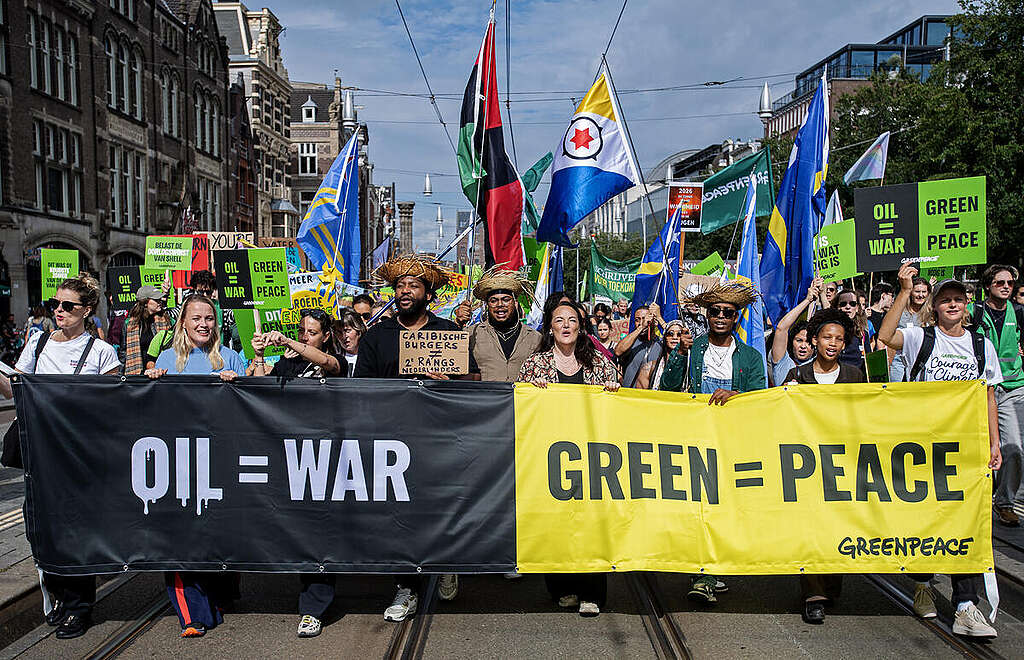


 Netherlands – On Saturday, September 12, 2026, tens of thousands gathered in Amsterdam for the annual Climate March. Protesters demand an immediate end to fossil fuel reliance and corporate pollution, advocating for a fair and sustainable future for all.

 Germany – Greenpeace Germany activists project a growing pile of coins onto a Hamburg Port fuel storage facility to protest soaring windfall profits in the German petrol market. They demand: ‘They profit – we pay!’

 Mexico – Greenpeace Mexico holds a peaceful protest in Mexico City’s Zócalo to call on the head of the federal executive branch, President Claudia Sheinbaum Pardo, to instruct the relevant authorities to cancel the mega-ammonia plant being built by Grupo Proman, Gas y Petroquímica de Occidente (GPO), in Topolobampo, Sinaloa.
 Indonesia – Haze caused by forest and land fires along the Kapuas River in Kalibandung Village, Kubu Raya, West Kalimantan, Indonesia.
 Germany – Greenpeace activists protest against the risks of cheap, disposable fashion outside the Berlin pop-up store of online retailer Shein, using barrier tape and banners. “Closed due to irresponsibility” reads a sign, whilst “Shame on you, Shein” is written on pink barrier tape. Greenpeace has repeatedly detected dangerously high concentrations of harmful substances – such as PFAS, the ‘forever chemicals’, and phthalates, a type of plasticiser – in clothing from Shein’s online range.
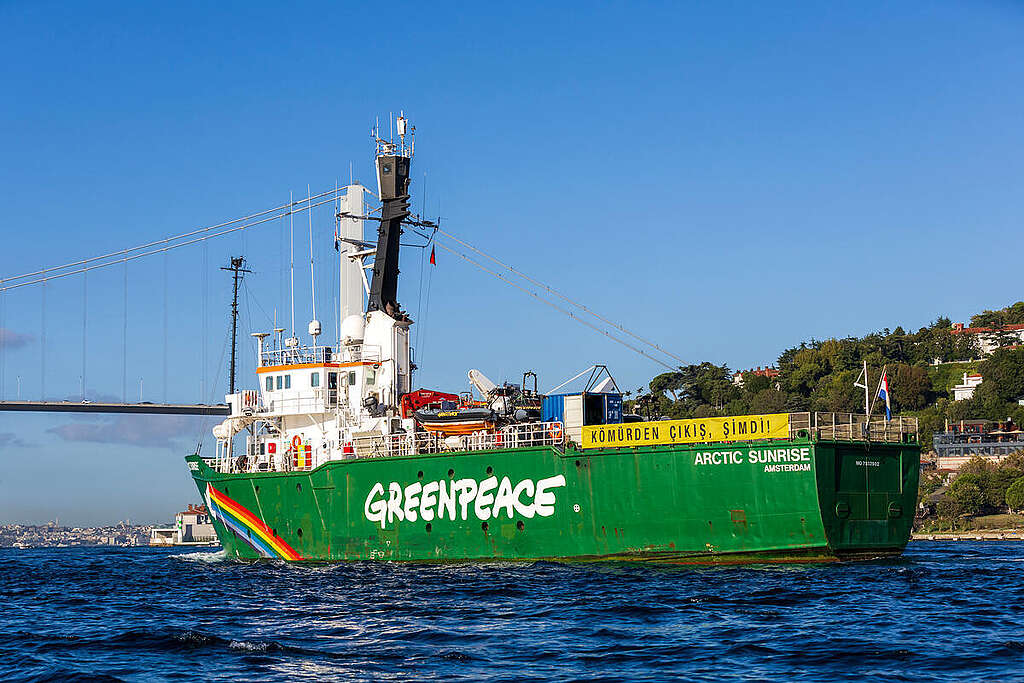
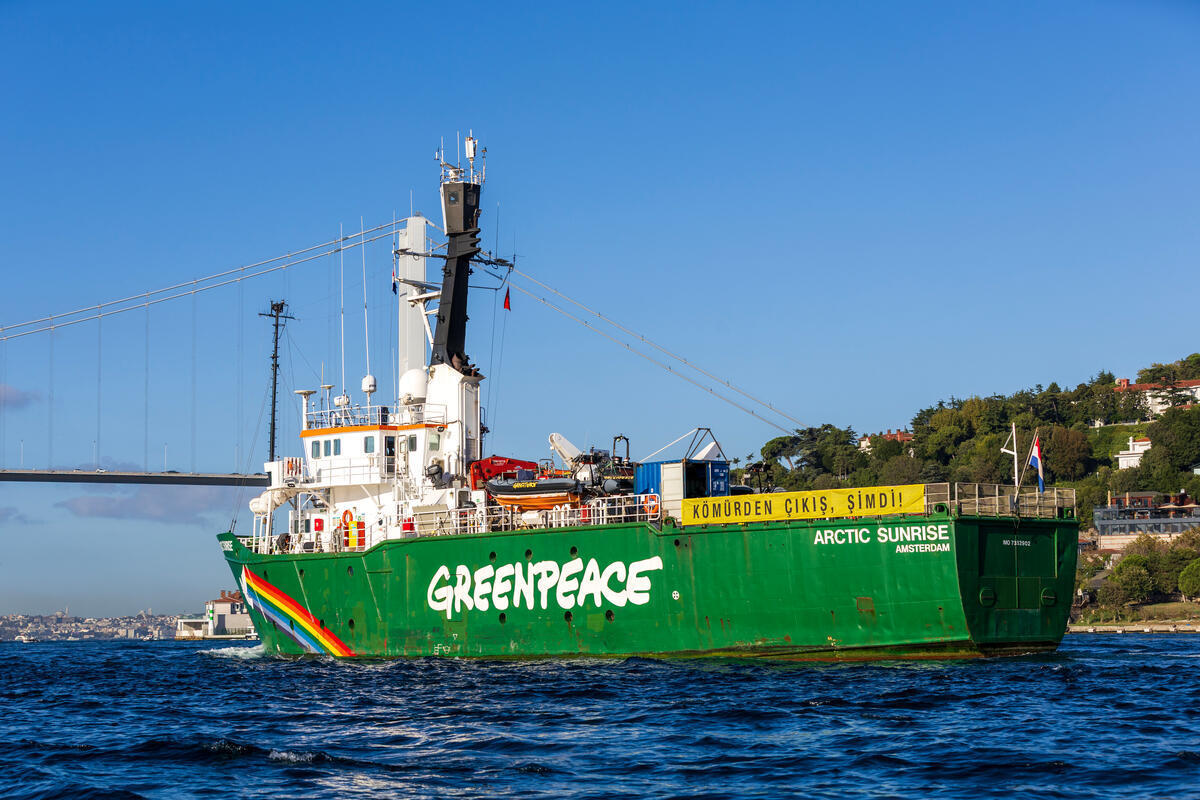
 Turkiye – As Greenpeace’s iconic ship, the Arctic Sunrise, passed through the Bosphorus river activists on board unfurled a banner reading ‘Phase out coal, now!’.
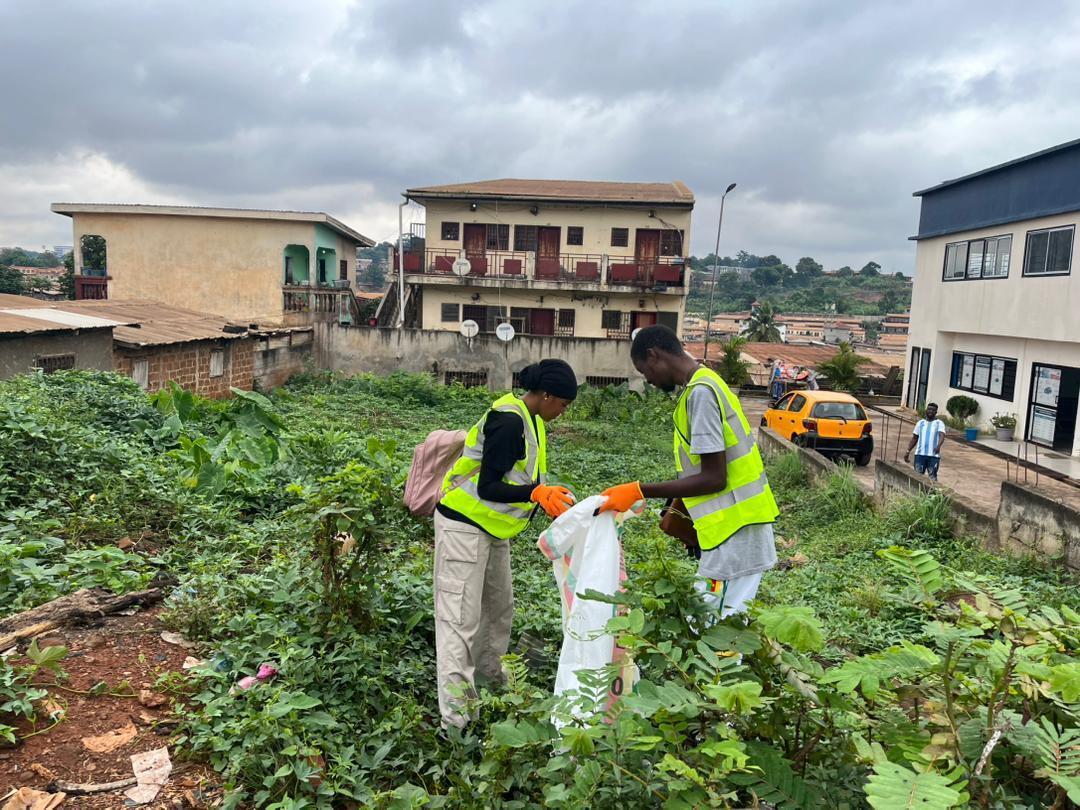
 Cameroon – Fifteen volunteers from Yaoundé took part in an ecological march and cleanup alongside the CNEDD (a Cameroonian non-governmental organization that promotes sustainable development and environmental protection) association to raise awareness and collect plastic waste. After the march, the participants debated the topic of plastic.
Why the UN General Assembly 2026 is a key political moment for the climate
Aaron Gray-Block
Starting today 18 September, world leaders are gathering in New York for the 81st United Nations General Assembly (UNGA), with a spotlight on our urgent global challenges in the context of a worldwide economic disruption caused by conflicts and geopolitical instability. Amid these tensions, the 2026 UNGA is a critical moment in the international climate calendar to revitalise global cooperation and multilateralism, with a key focus on the intensifying climate risks. The UNGA will be complemented by New York Climate Week (NYCW) – which runs from 20-27 September. Outgoing UN Secretary-General António Guterres is expected to make climate a central part of his legacy, declaring “the world stands at a juncture where joint leadership, not division, can save the planet.” Guterres will host a High-Level Event on Climate Action and the Just Transition – a summit that comes after the United Nations Environment Programme (UNEP) released a groundbreaking report declaring the world will overshoot the 1.5°C global warming threshold within the next few years. Overshooting 1.5°C – a limit leaders committed to pursuing in the Paris Agreement – will worsen extreme weather impacts and intensify the risks of climate change. This prospect makes this year’s UNGA a pivotal moment for political leaders to respond. The UNGA High-Level Week 2026 will run from 18 September 2026 to 28 September 2026 and Greenpeace will be covering the UNGA with a live blog, bringing you regular updates and insights. Check back here for rolling updates throughout the coming week. Find live updates below: Updated: 29 September While Chinese Vice President Han Zheng was speaking at the UN General Assembly this weekend, reiterating the need for wealthy nations to meet their climate finance commitments to the Global South, Chinese President Xi Jinping just finished meeting with his American counterpart Donald Trump. Amid trade discussions, there was an agreement that China would import 10 million tons of coal from the US in both 2027 and 2028. So, what to make of this commitment? Suspending the import of US coal was one of China’s early countermeasures in the first years of the trade war with the US. At the time, it was a low-hanging fruit in China’s countermeasures, as American exports of coal into China were very small. So, it was easy to use firm language like “suspend all coal imports” while ultimately needing to rearrange little on the Chinese side. This agreement to import 10 million tons again is in the big scheme of things not a large amount of coal, and also appears largely symbolic. (If history is any indicator, these deals are rarely 100% followed though on either, so time will tell if the cumulative 20 million tons ever make it over.) One risk of such a symbolic agreement is that it makes it look like China needs coal, which does not reflect the current state of China’s energy transition or Beijing’s planning moving forward. In China, the coal industry is in a structural decline. Coal power is no longer competitive with renewable energy without significant state support. And top-level planning documents have already relegated it into a “supportive role” from 2026 to 2030, as mass additions of renewable energy take center stage in what China is calling its “new power system.” Coal is on the way out. Greenpeace East Asia’s Beijing office calls for Beijing to present a clear deadline to phase out coal. This demand surrounds the lack of downward flexibility of coal power plants, as they are not well-suited to efficiently play a flexible, supportive role in the energy system, and the risk that lingering coal capacity presents to stronger uptake of massive wind and solar additions, including the need to install more energy storage battery systems on the power grid. But what’s already clear is that coal’s days are numbered, and 20 million (maybe) tons of coal imports won’t be a lifeline for a dying industry. Updated: 24 September A high-level meeting focused on the Existential Threats Posed by Sea Level Rise held in New York at the UNGA81 aimed to progress solutions and actionable commitments to combat sea level rise. In response, Shiva Gounden, Head of Pacific at Greenpeace Australia Pacific said: “At the first UNGA meeting on sea level rise in 2024, low-lying countries and small island states including Pacific nations called for urgent action to address a global crisis threatening one billion people worldwide. But global temperatures have continued to climb and the impacts from rising seas have only worsened. “The ocean, our moana, our wansolwara – a source of life and sustenance and security for Pacific communities – is transforming into a malevolent force; our cultures and way of life face an existential threat. This is why UN events must turn talk into action because limiting global warming to 1.5°C is a non-negotiable survival line for Pacific people. “Pacific Island nations are already facing at least 15-20 cm of irreversible sea level rise over the next 30 years regardless of future cuts to emissions. As the climate crisis worsens — as outlined in the latest UNEP report — extreme sea level and coastal flooding events will become much more frequent and intense. “Across the Pacific, we are witnessing our lands and coastlines being washed away with rising tides and storm surges. In Fiji, communities are planning or undergoing relocations away from vulnerable coastlines as they become some of the world’s first climate migrants. “Australia, one of the world’s largest fossil fuel exporters, is offering visas to 280 Tuvalu citizens per year under a climate migration deal offered to the atoll nation, large parts of which will be rendered uninhabitable due to sea-level rise by 2050. But land and identity are inseparable in the Pacific. When low-lying lands in countries like Tuvalu, Kiribati and the Marshall Islands are washed away and communities are forced to relocate, people’s traditions, cultures and ancestral connections are likewise eroded. “Coastal flooding leads to saltwater inundation of low-lying agricultural lands, turning once fertile lands inhospitable to staple foods like taro, cassava and breadfruit and resulting in lost livelihoods. Communities can become malnourished, forced to rely on imported and often highly processed foods, further entrenching health impacts. These are the injustices of climate change. “So who should pay when communities are forced to rebuild and relocate? Who should bear the consequences due to the impunity of some of the world’s most polluting countries and corporations? We can and must find our way back to 1.5°C. That means a just transition away from all fossil fuels, climate finance that puts communities first, and ensuring oil and gas profits don’t extinguish our future.” Updated: 23 September The High-Level Event on Climate Action and the Just Transition – a final initiative of outgoing Secretary-General Guterres who has made climate a key element of his legacy – must help consolidate a response to the global climate and energy crises. Jasper Inventor, Deputy Programme Director, Greenpeace International said: “We are overshooting our climate limits while fossil fuel companies are overflowing with profits. As those most responsible for the climate crisis continue to cash in, this year’s repeated disasters pose a clear question: will politicians finally end the industry’s destruction? Talk is cheap, but life is priceless and our climate stability is disintegrating the longer we delay. “The answer is not found in discord or division, but urgent collective action for our mutual benefit. Governments must develop and implement national roadmaps that accelerate a fast, fair and funded just transition into renewable energy and ensure we hold fossil fuel polluters and forest destroyers to account for the destruction they’ve caused.” Updated: 23 September The UN High-Level Solutions Dialogue on Methane at the UN General Assembly aimed to advance ambition and action around three priority sectors outlined by UN Secretary-General Guterres: fossil fuels, waste and agriculture. Greenpeace International Executive Director Mads Christensen addressed the dialogue and called for urgent action against industrial livestock production – the largest source of methane emissions. As the world faces a looming 1.5°C warming overshoot in the next few years, cutting methane offers the fastest path to slow near-term warming. Christensen warned against ignoring agricultural emissions in national climate policies: “We are putting our heads in the sand if we expect to reach the goals of the Global Methane Pledge without addressing livestock. Unchecked industrial livestock production drives superheating emissions, deforestation, water pollution and extinction.” Christensen highlighted how corporate lobbying has stalled policy action across the agriculture sector: “Industrial agriculture claims livestock emissions are too hard to reduce. They lobby for subsidies and deregulation that allow industrial methane emissions to grow unchecked – projected to rise by 30% by 2050.” Greenpeace is calling on UNGA81 leaders to show political courage by transforming global food systems. “We can reduce livestock emissions by shifting away from industrial production to nature-friendly farming that restores biodiversity, sequesters carbon, revitalises rural economies and empowers local farmers,” Christensen added. Updated: 23 September Panama and Vanuatu hosted a high-level ministerial dialogue at the UN General Assembly focused on the state of environmental multilateralism and how international cooperation can adapt to deliver on the triple planetary crisis of climate change, biodiversity loss and pollution. One of the three case studies was the resumed negotiations for a Global Plastics Treaty. It was a dialogue Greenpeace attended as we continue to advocate for a legally binding treaty to regulate the full plastic life cycle: extraction, production, design, use and disposal. Such a treaty is critical because plastic is already in the food we eat, the water we drink and the air we breathe. Plastic production is tied to fossil fuels, toxic chemicals, biodiversity loss and unequal health impacts. As plastic pollution crosses borders, national action alone cannot stop it and recycling alone cannot solve the crisis either, as it’s driven by ever-rising production. So the question is: how can multilateralism overcome deadlock? Multilateralism works when inclusive negotiations are matched by political courage. A large coalition of ambitious countries should advance science-based rules, refuse a weak lowest-common-denominator agreement and keep the door open for every state to join. Coalition-led action should strengthen the UN process by demonstrating workable standards, mobilising finance and sustaining pressure for universal rules. Greenpeace believes global cooperation is needed now more than ever. Rules based global order helps us all work together to tackle the triple planetary crisis and countries need to take decisive action for the global good. The answer is not more delay or voluntary promises. UNGA81 leaders should build a high-ambition coalition capable of securing binding global rules that put human rights, health and the planet before petrochemical profits. As Graham Forbes, Greenpeace’s Global Plastics Campaign Lead, said: “the plastics crisis is a public health emergency”. We are therefore calling for global plastic production to fall by at least 75 % by 2040, alongside binding controls on hazardous chemicals, the phase-outs of unnecessary single-use plastics and targets that scale reuse and refill systems. Modern environmental multilateralism must deliver for the people and planet: governments using shared evidence, common obligations and accountable cooperation to turn the plastics tap off, protect communities and make a toxic-free, reuse-based economy possible for everyone, everywhere. Updated: 23 September Following the surge of interest at the Bonn Climate Change Conference (SB64) and London Climate Week in June, Türkiye’s COP31 President-Designate Murat Kurum announced a new 35 by 35 electrification pledge during the UN General Assembly and committed to “rally the world” behind it. Chris Bowen, Australia’s President of Negotiations for COP31, echoed that call, declaring close partnership with Türkiye to ensure COP31 would become an “Electrification COP”. The case for electrification is abundantly clear – reinforced by the IEA’s new special report showing that ‘35 by 35’ is in “striking distance” and can yield US$400 billion in fuel import savings and cut 15 % off household energy bills. In response to growing momentum on electrification, Tracy Carty, Global Climate Politics Expert at Greenpeace International said: “The focus on electrification is welcome and necessary, but the conversation can’t end there. The ‘35 by 35’ goal must be a floor not a ceiling for ambition and its success depends on ensuring electricity comes from renewable sources that displace fossil fuels, as part of an equitable, affordable, 1.5°C aligned and people-centred transition backed by finance and other support to developing countries that need it.” While new records are being set for renewables year on year, a new IRENA-led assessment launched in New York warns that meeting the global target of tripling renewables by 2030 means installed capacity must more than double today’s levels. Agreement at COP31 must therefore pair the ‘35 by 35’ goal with a commitment to rapidly scale up renewable electricity generation. According to the IEA and IRENA 1.5°C scenarios – on which the 35 % electrification goal is based – more than 75 % of electricity generated needs to come from renewables by 2035. Crucially, ambition on renewables will mean nothing if emissions from coal, oil and gas continue to rise unchecked – something COP31 cannot afford to ignore. As Tuvalu’s Climate Minister Dr Maina Vakafua Talia said recently: “The survival of people is not determined by how many solar roof tops we put on … it’s determined by practical actions to not expand fossil fuel extraction”. Electrification alone won’t solve the climate crisis – only ending fossil fuels will. Updated: 23 September In his remarks at the opening session of the UNGA on 22nd September, Türkiye President Recep Tayyip Erdogan referenced the zero-waste movement as a bridge between different paths to tackle climate change. In response, Berk Butan, Social and Economic Systems Campaigner at Greenpeace Türkiye said: ‘We support a true zero-waste vision as a vital global bridge and transformative lever in the fight against the climate crisis. However, to fully realise this potential, zero-waste must extend beyond downstream waste management to target the root causes of the crisis. “To address the devastating impacts of plastic on climate, public health and biodiversity, we must tackle the issue at its true source: production and trade. The unchecked expansion of fossil fuel-based plastic production cannot be recycled away, nor should any country bear the environmental and social burden of the global plastic waste trade. “Shifting pollution liabilities across borders through plastic waste imports, often disguised as recycling, only deepens environmental injustice and masks the necessity of production limits. “Accordingly, to align with the 1.5°C climate target and protect our ecosystems and communities, we urgently call for an end to the global plastic waste trade that causes environmental and social harm and global action that cuts plastic production by at least 75 % by 2040.” Updated: 23 September At the start of New York Climate Week, Türkiye’s Environment, Urbanisation and Climate Change Minister, and COP31 President-designate, Murat Kurum launched the COP31 Presidency’s electrification pledge to increase electricity’s share of global final energy consumption needs to 35 % by 2035. In response, Emel Türker Alpay, Climate and Energy Campaigner at Greenpeace Türkiye said: “We welcome the fact that the global electrification goal has now been turned into a formal global pledge by the COP31 Presidency. However, electrification cannot be an end in itself – it must actively displace fossil fuels as part of an equitable, affordable and people-centred transition to keep the 1.5°C goal alive. “The absence of a concrete commitment to displace fossil fuels as part of the pledge is concerning. The impacts of our dependence on fossil fuels are clear and we must take urgent and clear steps now towards a just transition away from coal, oil and gas. “For the electrification target to be a milestone securing 1.5°C, the transition away from fossil fuels as part of electricity generation must be accelerated. We must commit to rapidly increasing renewable electricity generation to at least 75 % by 2035. “COP31 must connect a global electrification goal, national roadmaps and international support into one coherent implementation framework. If done correctly, it will turn electrification from a headline target into pathways that countries actually own: delivering the transition away from fossil fuels while advancing energy access, resilience and sustainable development while also showing that international cooperation can turn collective ambition into real, shared results. “It is clear that the COP31 Presidency comes with a responsibility of keeping the 1.5°C target in sight. The electrification goal is a valuable step toward this direction but Türkiye must also lead by example and cancel new coal power plant projects, announce no new coal power plant commitments and set a date for the just transition away from coal.” Updated: 22 September Dr Oulie Keita, Executive Director at Greenpeace Africa has highlighted the theme of this year’s UNGA is ‘Restoring Trust, Managing Transformation: A United Nations That Delivers for All.’ But in attending this year’s UNGA, she argues that restoring trust will require more than climate promises because the continent has for too long failed its communities: “Africa has heard decades of climate promises and the time has come to turn those promises into reality. Climate justice cannot remain a promise on paper. It must be felt in people’s lives, protected in their rights and visible in the opportunities they have to build a better future. “Trust will not be restored through more commitments or pledges. It will be restored through action when people can see that global commitments are making a difference in their everyday lives. Climate commitments must become national policies and budgets too! “Adaptation costs in sub-Saharan Africa have soared to an estimated US$30–50 billion annually over this decade, while public adaptation finance continues to fall short of what’s needed. UNGA81 must advance reforms that make climate finance easier to access, more predictable and more responsive to national and community needs. “Third, a just transition away from fossil fuels must create economic opportunities for African people and not impose environmental obligations on an already struggling population. And it must ensure that those most responsible for the climate crisis carry their fair share of the cost.” Updated: 22 September On the sidelines of the UNGA, we joined a meeting focused on the development of the global roadmap for the transition away from fossil fuels led by Brazil, which they committed to develop at COP30. The roadmap presents an opportunity to advance national and international action to reduce barriers and improve enablers towards greater ambition. The roadmap process helps bring hope in a moment of global crisis and is a timely initiative amid repeated climate impacts and after August became the joint hottest month on record. The question now is how to create a global follow-up process of implementation and support. Brazil’s COP30 Presidency is set to deliver two global roadmaps: one on eliminating our dependency on fossil fuels and one to end deforestation. Nationally, Brazil is also set to develop a national roadmap regarding the transition away from fossil fuels. Greenpeace is urging all countries to develop and implement ambitious national roadmaps and implement them without delay, with developed countries leading the way. We need clear plans to transition away from fossil fuels and eliminate and reverse deforestation across the globe. Crucially, this transition must be fast, fair and funded, and just for all. A just transition away from fossil fuels protects vulnerable workers, communities and regions. It also promotes local solutions and ensures clean energy access without leaving anyone behind. Ending deforestation similarly requires protecting and recognising the vital roles of Indigenous Peoples and local communities. They remain the primary guardians of our planet’s vital ecosystems. Protecting their rights and forests preserves biodiversity, secures human livelihoods worldwide and provides climate resilience. We cannot solve modern crises using antiquated, destructive models. Replacing fossil fuels creates new economic opportunities across all sectors. Protecting nature ensures food security, clean water, and stable environments. Cooperation must replace competition on the path to sustainability, which must include sufficient public finance provided by developed countries to developing countries. Part of this finance could and should be raised by taxing fossil fuel corporations and the super-rich. The time for passive commitments has passed. A safe future requires bold action and decisive policy shifts from all countries now. Updated: 22 September At New York Climate Week and as world leaders started gathering for the UNGA, the Make Polluters Pay International Coalition – including Greenpeace International, 350.org, Oxfam International and GreenFaith – presented more than two million petition signatures to UN Assistant Secretary-General for Climate Action, Selwin Hart, alongside frontline campaigners and communities. The demand: make fossil-fuel companies pay for the climate damage they have caused. From a blocked Strait of Hormuz to glacial collapse in Nepal and damaging wildfires across Europe, our dependence on fossil fuels is destabilising our economies with energy shocks and repeat climate disasters. Households carry these burdens of spiking energy bills and climate losses as the companies responsible rake in extraordinary profits. We pay. They profit. In a global survey conducted by Greenpeace International and Oxfam International, more than eight in 10 people back taxing oil and gas companies to pay for their climate damages. The UN’s outgoing Secretary-General, António Guterres, has repeatedly pressed the same case. Campaigners are now calling for binding measures: permanent surtaxes on fossil fuel profits, phasing out fossil fuel subsidies, and fines ring-fenced for recovery and adaptation in the communities hit hardest. So, what’s next for the Make Polluters Pay campaign? The pressure now shifts to COP31 and, from late November in Nairobi, the next round of the Global Tax Treaty – the world’s first truly democratic process to reform global tax rules for people and the planet. It is a pathway to clamping down on tax-dodging and making the fossil fuel industry and ultra-rich polluters pay their fair share, reclaiming the money to fund our communities, renewable energy and public services. The money exists and political momentum is growing. It’s up to us to keep up the pressure. Updated: 21 September Ahead of the UNGA General Debate, Australian Prime Minister Anthony Albanese delivered a speech at the opening of New York Climate Week, titled: ‘The New Stakes: climate security is national security’. In response, Dr Simon Bradshaw, COP31 Lead for Greenpeace Australia Pacific said: “It is encouraging to see the Prime Minister Anthony Albanese acknowledging the immediate and profound climate threat to communities in the Pacific, Australia and worldwide, and the need to work together, with bravery and compassion. Now we must match those words with real action to phase out fossil fuels. “Earlier this month in Palau, Prime Minister Anthony Albanese committed to help accelerate the transition away from fossil fuels and defend the crucial goal of limiting warming to 1.5°C. However, Australia continues to undermine its aspirations for global climate leadership by expanding fossil fuel production, approving 37 coal and gas projects since elected. “Australia fought hard for the privilege to chair the next round of global climate negotiations in partnership with the Pacific. The world is crying out for a clear vision and leadership from Australia as we head towards COP31 in Antalya. Australia must ensure COP31 boosts our shared security by accelerating the transition away from fossil fuels — get this right, and Australia will emerge as a responsible middle power and force for good in troubled times.” Texte intégral (5795 mots)
Greenpeace live blog coverage of UNGA 2026
Despite US-China deal, coal is already on its way out in China, and won’t be coming back
The risks of global sea level rise and why we need to act
UNGA climate event must lead to accelerated action
Why methane emissions must be rapidly reduced to limit global warming
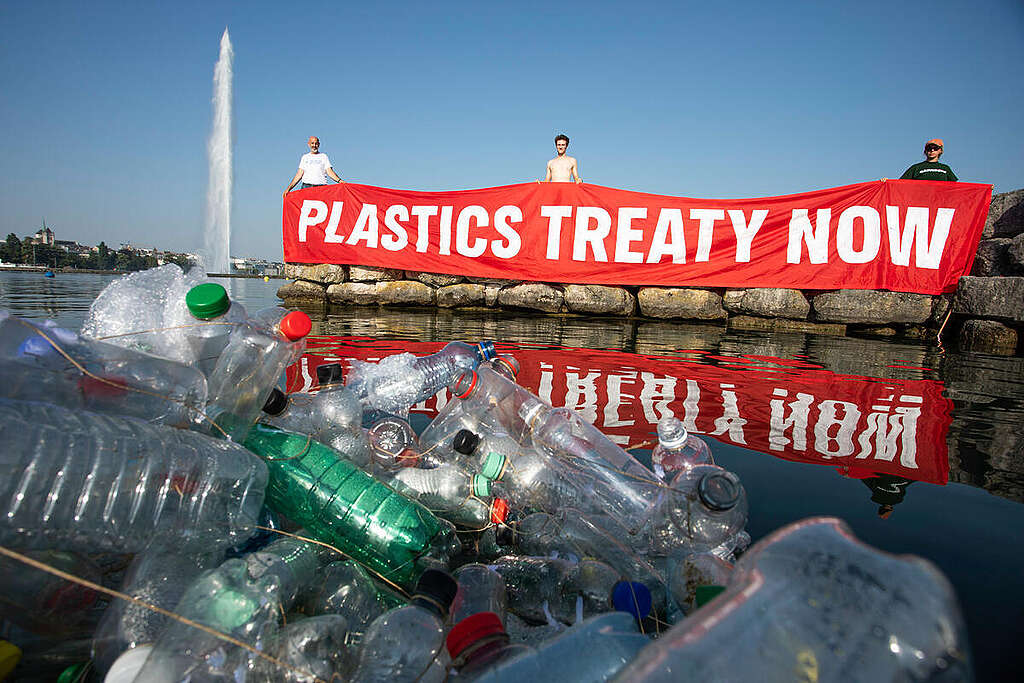
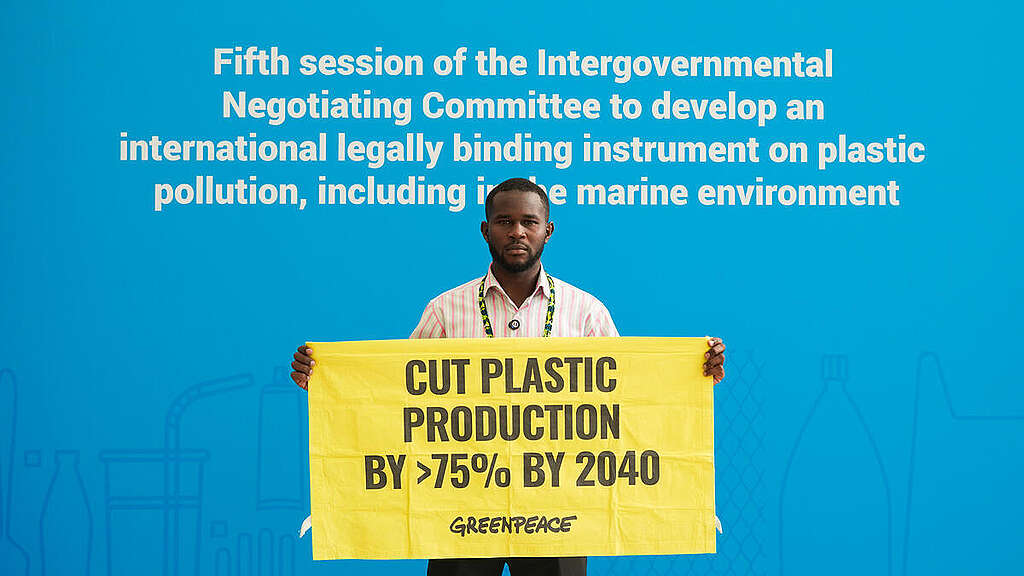
How can multilateralism deliver a strong Global Plastics Treaty?
How the momentum on electrification is building ahead of COP31
Zero-waste vision must tackle production and trade of plastics as part of climate fight
Why Türkiye needs to lead the way on the COP31 electrification goal
UNGA 2026 must restore trust and deliver on promises for African communities
What’s next for the COP30 Presidency’s roadmap initiative for the transition away from fossil fuels?
Why are campaigners calling on governments to make polluters pay?

Why Australia must ensure COP31 accelerates the transition away from fossil fuels
NVIDIA’s greenwashing tactics and hidden emissions revealed in new research
Greenpeace International
Amsterdam, Netherlands — NVIDIA, the world’s most valuable company by market capitalisation, has been using greenwashing tricks to misleadingly mask its staggering emissions impacts, finds a new analysis. According to the briefing, NVIDIA’s indirect emissions have risen 725% since 2020[1], and it is estimated that undisclosed emissions from the use of sold chips could be up to double that. Avex Li, Project Lead for Greenpeace East Asia’s AI Supply Chain Campaign, said: “NVIDIA wants the world to believe that AI will solve the climate crisis, while ignoring the rapidly growing emissions behind its own products and billion-dollar supply chain networks. As one of the world’s biggest beneficiaries and a key player in the AI frenzy, with immense market power, cash flow, and influence, NVIDIA cannot distance itself from the real-world environmental impacts of its business.” The briefing, written by analyst and lead author Ketan Joshi and a consortium of civil society groups, including Greenpeace International, Beyond Fossil Fuels, Friends of the Earth, Green Screen Coalition, Stand.Earth, Kairos Fellowship, and Climate Action Against Disinformation, is the first analysis of greenwashing-style statements commonly used by NVIDIA.[2] NVIDIA’s business lies primarily in chips manufactured in East Asia and sold across the world, consuming vast amounts of energy throughout their lifecycle[3]. At the end of the line, they are largely used in new, similarly energy- and water-hungry data centre buildings, mainly for the purpose of operating generative AI[4]. Both pillars of this business model share a common outcome: they exacerbate the climate crisis and adversely affect local communities[5]. Xueying Wu, campaigner on Big Tech for Greenpeace International, added: ENDS NVIDIA’s climate hoax : Full Report Notes: [1] The briefing compiles NVIDIA’s own disclosures between 2020 and 2026 to show for the first time that its Scope 3 emissions, primarily from product manufacturing, have risen 725% over that period. It also uses estimated chip power consumption to show emissions from the use of sold chips could be up to 21 million tonnes of carbon dioxide equivalent in 2025. ‘Scope 3’ emissions (Category 1-8) relate to measured greenhouse gas impacts outside the formal boundaries of the company’s activities, such as the emissions from manufacturing raw materials used in manufacturing, or the use of products sold by a company. [2] NVIDIA distracts from these emissions using three key claims. First, they claim AI’s development will be a ‘net benefit’ for climate. Second, they claim demand response for data centres enables renewable growth. And third, they herald energy efficiency as progress on sustainability. We debunk all three claims as misleading. NVIDIA recently announced exclusive supply to an Ohio data centre in the US reportedly set to be powered by what would be one of the world’s biggest gas plants. This is an illustration that the company is projected to accelerate the global climate crisis through its enablement of the fossil-fuelled AI boom. [3] According to Greenpeace East Asia’s research, titled “Nvidia’s Green Illusion”, NVIDIA shifts its environmental footprint onto East Asian key suppliers reliant on fossil fuels without directly investing in local renewable energy infrastructure. [4] This NVIDIA press release marking its Q2 FY27 financial results demonstrates that the data center segment, driven entirely by demand for generative AI hardware, accounts for 92.5% of its revenue. [5] Based on a United Nations University study, this UN News article reveals how the expansion of AI drives environmental injustice by saddling local communities and lower-income nations with severe ecological burdens—including water depletion, energy strain, land use, e-waste, and mining pollution—while its benefits remain heavily concentrated in a few wealthy nations. Contacts: Guillaumine Lickel, Deputy Communications Lead , Greenpeace International, +33 6-73-89-48-90 (EMEA), glickel@greenpeace.org Madison Carter, National Press Secretary, Greenpeace USA, +1 703-554-4842 (Americas), mcarter@greenpeace.org Yujie Xue, International Communications Officer, Greenpeace East Asia,(APAC) +852 51273416 (APAC), yujie.xue@greenpeace.org Greenpeace International Press Desk, +31 (0)20 718 2470 (available 24 hours), pressdesk.int@greenpeace.org Texte intégral (935 mots)
“NVIDIA is driving a system of tech colonialism: monopolising the profits of AI while offloading its ecological impacts onto the Global Majority. Meanwhile, NVIDIA together with other tech giants is inflating the AI bubble that gambles with global financial stability, concentrating more and more power in tech corporations’ hands.”
Greenpeace demands tech serving the public good.More specifically, NVIDIA must accelerate the energy transition by:
NVIDIA’s AI climate hoax: New analysis on NVIDIA’s rising emissions and greenwashing
Greenpeace International
NVIDIA markets artificial intelligence as a climate saviour, but new research by Greenpeace International and a consortium of civil society partners reveals a starkly different reality. Behind the tech giant’s sustainability messaging lies a staggering carbon footprint: NVIDIA’s indirect Scope 3 emissions have surged by 725% since 2020. Furthermore, undisclosed emissions from operating sold chips could add up to 21 million tonnes of CO2 equivalent in 2025. The briefing debunks three core greenwashing tactics used by NVIDIA: claiming AI yields a net climate benefit, promoting data center demand response as a renewable driver, and masking skyrocketing energy consumption behind efficiency gains. Far from driving a clean energy transition, NVIDIA hardware powers energy-hungry data centers, such as a proposed Ohio facility backed by one of the world’s largest gas plants. Because NVIDIA relies on East Asian manufacturing supply chains heavily reliant on fossil fuels, it effectively offloads its ecological burden onto lower-income nations while concentrating AI wealth. This pattern reflects a system of tech colonialism that accelerates environmental injustice through energy strain, water depletion, and land degradation. To address its climate impact, NVIDIA must stop relying on greenwashing illusions. Greenpeace demands that NVIDIA take direct responsibility by investing deeply in new renewable energy global capacity and expanding its 100% renewable energy target across its entire manufacturing supply chain by 2030. NVIDIA’s AI climate hoax: New analysis on NVIDIA’s rising emissions and greenwashing Ketan Joshi is an analyst, writer and communicator specialising in clean energy, corporate accountability and climate advocacy. He has worked with government renewable energy agencies, research bodies including the Commonwealth Scientific and Industrial Research Organisation (CSIRO) in Australia, and is the author of Windfall: unlocking a fossil free future. He was lead author on The AI Climate Hoax (2026) and Energy Vampires (2026, Greenpeace Australia Pacific). This research was published in collaboration with a coalition of climate, tech and accountability organisations: Kairos Fellowship, Stand.earth, Beyond Fossil Fuels, Friends of the Earth, Climate Action Against Disinformation (CAAD), Green Screen Coalition and the Green Web Foundation. (425 mots)
Download the report:
About the author
Partner organisations
🌱 Bon Pote
Actu-Environnement
Amis de la Terre
Aspas
Biodiversité-sous-nos-pieds
🌱 Bloom
Canopée
Décroissance (la)
Deep Green Resistance
Déroute des routes
Faîte et Racines
🌱 Printemps des Luttes Locales
F.N.E (AURA)
Greenpeace Fr
Journalistes d'Investigation Ecologie Climat
Journalistes & Ecrivains Nature Ecologie
La Relève et la Peste
La Terre
Le Lierre
Le Sauvage
Low-Tech Mag.
Motus & Langue pendue
Mountain Wilderness
Negawatt
Observatoire des médias sur l Écologie
🌱 Observatoire de l'Anthropocène